National Archives puts more workshops online

FOR IMMEDIATE RELEASE                                                                               
July 30, 2012
National Archives Puts More Popular Records Workshops Online
More “Know Your Records” videos now available on National Archives’ YouTube Channel
Washington, DC… The National Archives has launched new online videos of its most popular genealogy “how to” workshops. These videos cover “hot topics” in genealogical research such as Civil War records, online resources and databases, and more. These workshops led by National Archives experts are available on the National Archives YouTube channel at http://tinyurl.com/NARAGenie.
The National Archives–produced Know Your Records video shorts cover the creation, scope, content, and use of National Archives records for genealogical research. “We are happy to make more of our most popular genealogy lectures available online. We welcome researcher feedback and will continue to make more workshops available online for free for viewing by anyone, anywhere, at any time,” said Diane Dimkoff, Director of Customer Services. 
For the first time, researchers and staff voted for their favorite topics—and the National Archives listened:
National Archives electronic records expert Dan Law discusses using electronic records for genealogy research and shows how to access such records using the National Archives Access to Archival Databases (AAD) online search engine.
National Archives genealogy expert John Deeben explores War Department death records created during and after the Civil War. These records show how the government documented personal circumstances of soldiers’ deaths on the battlefield, in military hospitals, and in prisons.
National Archives archivist Reginald Washington explores marriage records from the Bureau of Refugees, Freedmen, and Abandoned Lands (the Freedmen’s Bureau). The Freedmen’s Bureau provided assistance to tens of thousands of former slaves and impoverished whites in the Southern states and the District of Columbia. These records from 1865 through 1872 constitute the richest and most extensive documentary source for investigating the African American experience in the post–Civil War and Reconstruction eras.
Over 2.8 million men (and a few hundred women) served in the Union and Confederate armies during the Civil War. National Archives genealogy expert John Deeben demonstrates how to research and use Civil War Army service records.
National Archives archivist Damani Davis examines Federal records relating to the “Kansas Exodus” (the so-called “Exoduster” movement), which was the first instance of voluntary, mass migration among African Americans. This mass exodus generated considerable attention throughout the nation and resulted in a major 1880 Senate investigation. For more information, see http://www.archives.gov/publications/prologue/2008/summer/exodus.html.
Ancestry.com has digitized selected National Archives microfilm publications and original records and made them available on their web sites for a fee. Lead Family Historian for Ancestry.com Anastasia Harman discusses these records and their use for genealogy research.   Access to Ancestry.com and Fold3 (formerly Footnote.com) is available free of charge in all National Archives Research Rooms, including those in our regional archives and Presidential Libraries. For a list of National Archives records available online through Ancestry.com and other digitization partners, see http://www.archives.gov/digitization/digitized-by-partners.html.
Background on “Know Your Records” programs
The National Archives holds the permanently valuable records of the Federal Government. These include records of interest to genealogists, such as pension files, ship passenger lists, census and Freedmen’s Bureau materials. The “Know Your Records Program” offers opportunities for staff, volunteers, and researchers to learn about these records through lectures, ongoing genealogy programs, workshops, symposia, the annual genealogy fair, an online genealogy tutorial, reference reports for genealogical research, and editions of Researcher News  for Washington, DC, area researchers.

Great Northern and Northern Pacific railway record inventories now online

The Minnesota Historical Society just announced:

“Online finding aids just launched 
For the first time ever, inventories of the Great Northern and Northern Pacific railway companies are available online. With more than 16,000 boxes of archival records, these two collections fill more than 15% of the total space in the stacks and have been a draw for railroad buffs, historians and genealogists for decades.Online finding aids allow for more convenient browsing, faster searching and the discovery of related materials that may have been overlooked before.”


These inventories are extensive and well worth reading. They cover so many more states than Minnesota. The personnel, accident, land, and other records are fabulous. For more info on this exciting news click here. 

Minnesota 1940 census index now available!

The index for the Minnesota 1940 census has gone live at www.findmypast.com! My plans for the day are now changed. I am guessing it will be at www.familysearch.org pretty soon. These indexes and images are FREE.

This index was created by volunteers from all over the world. Many volunteers from the Minnesota Genealogical Society participated and we were lead by Kathy Lund. More states need to be indexed. Check them out and sign up to help at FamilySearch.

War of 1812 Preserve the Pensions Project update

You may have read previous posts I did about this exciting project. I just checked the FREE images on the Fold3 website www.fold3.com/title_761/war_of_1812_pension_files/ and there are now 253,498 images on there. I think July 4th is a great day to honor this project. I have donated twice and will donate again in August at the Federation of Genealogical Societies (FGS) 2012 conference in Birmingham and to the Illinois State Genealogical Society of which I am a member (see below). We are getting closer to the D section of the alphabet so I can check for some of my brother-in-law’s Dubois family. Then let’s get moving faster so I can check my late father-in-law’s Hatfields, Johnsons, and Warrens.
I am a member of the FGS Board of Directors and we recently learned of two major things which have greatly impacted this project. 

On Monday, June 18th (the 200th anniversary of the start of the War of 1812), the Illinois Genealogical Society (ISGS) issued the ISGS $10,000 War of 1812 Pension Match Challenge. ISGS will MATCH any donation up to the first $10,000 that is made before December 31, 2012. This means:

  • If you donate $10, ISGS will match your donation with another $10
  • If you give $100, ISGS will also give $100 to the project
  • In addition, Ancestry.com will also match the overall amount donated by individuals and ISGS, which means that the $10,000 raised plus the $10,000 in matching donations will become:
  • $40,000! 
  • Your $10 donation to help digitize these files actually becomes $40!

Find out all the details at the Illinois State Genealogical Society’s webpage. If you’re interested in donating to the project, giving through the Illinois State Genealogical Society will ensure that your gift is quadrupled in value! One certainly cannot beat that kind of an investment.

Then on June 25th, the Federation of Genealogical Societies announced another major gift for the project. The FGS press release on that said:

“The Federation of Genealogical Societies (FGS) announces the donation of a generous gift in the amount of $135,000 from the estate of the late Jon Stedman in memory of his mother, Ardath Stedman. The donation to the Preserve the Pensions – War of 1812 Pension Digitization Fund will be used to help preserve and digitize War of 1812 Pension records.

Hollace Hervey, executrix of the estate, indicated that Jon Stedman was “always interested in preservation and bringing information to the front” so genealogists could more easily use it. Besides caring passionately for facilitating genealogists doing good research, Stedman had a deep love and affection for his mother who was a genealogist in her own right. The Preserve the Pensions project is just such a preservation and access endeavor, and FGS is honored in receiving this generous donation.

The $135,000 donation is a significant lead gift to the Preserve the Pensions project as FGS ramps up its fundraising efforts (to raise $3.7M) during the bicentennial of the War of 1812 which started on June 18, 2012. Members of the genealogy and family history communities as well as the general public are invited to learn more about this important record preservation project by visiting the Preserve the Pensions website at www.fgs.org/1812 and assist with honoring our nation’s heritage by preserving the records of our past.”

FGS genealogy conference discount deadline is Sunday.

The 2012 edition of the Federation of Genealogical Societies annual conference is just two months away. It is taking place in Birmingham, Alabama. Last year it was in Springfield, Illinois. The first bullet below is the biggest reminder. Please let your genealogy friends know about this discount deadline.

  • If you register between now and the end of Sunday, July 1st you will be registering at the price that reflects the $50.00 discount for the conference. On Monday, that price goes up. The cost for the luncheons, special events, and workshops do not increase. Take care of all this right here.
  • Don’t forget to register for luncheons because other options for lunchtime are quite limited near the Convention Complex and hotel.
  • As always, the workshops are filling quickly. Get your registration in for those now so you won’t be disappointed. Click here and scroll down to the Workshop category.
  • The Sheraton Birmingham Hotel has run out of king rooms but there are still some rooms left with two double beds. 
  • Speaking of that hotel, it is conveniently connected to the Birmingham/Jefferson Convention Complex by a covered skyway. It’s also easy to cross at street level.
  •  In case you haven’t seen it mentioned before, each registrant receives a large number of door prize tickets. There are some super-sized door prizes! 
  • For more conference updates, visit www.fgsconferenceblog.org

July 2nd Indexing Extravaganza

This press release was sent by FamilySearch. I will be participating. Will you? Just think what we genealogists can do if we band together. I have been one of the many who are helping to index the 1940 census and I really enjoy it. I often do it in the evening and find it relaxing. Visit https://familysearch.org/ and click on “Indexing” at the top of the screen to get started. The fill-in indexing forms are easily understood.
    
Will July 2, 2012, Be Our First “5 Million Record” Day?

July 2, 2012, is going to be an amazing day! We can feel it! It could be the first day that we achieve “5 Million Name” fame. That’s right. July 2nd might be the day that we index and arbitrate 5 million names (or records) in just 24 hours! No other name transcription project that we know of has ever come close.

Together, we’ve achieved unbelievable success in the past three months. Our highest day for indexing & arbitrating combined—for the last three months and in the history of indexing—was April 30th. On that day, we reached 4.9 million records submitted. Amazing! We nearly made 5 million with just our everyday effort!

To make sure we reach the goal of 5 million records, we’ll need help from every indexer and arbitrator out there. Everyone will need to submit an extra batch or two (or more!) during the day. Remember, though, that our “day” starts at 00:00 Universal Coordinated Time (UTC/GMT), which means 6pm MDT (Utah time), on Sunday, July 1st. Check the Facebook event page for your local start time.

Now, don’t think that we’re focusing completely on quantity and forgetting about quality. Next week, to prepare, we’ll provide ways to improve the quality of your work and suggestions for how to get ready for the big day.

Spread the word! Tell your friends and family about the opportunity to be a part of this history-making event. We may not have another chance like this for years, so plan now to get involved. We need you and everyone else out there to reach this goal!

Look for more details next week. For now, let’s keep on indexing (and arbitrating)!

Picture board time of year

Yes, it’s that time of year. Are you putting together a set of photos to display at a graduation open house, wedding shower, or wedding? Maybe you are doing it in a slide show format. Whichever way, it’s time to also make sure those pictures are labeled. Even better, write up a few words that tell the story of the photo and the people in it. Where was it taken? How are the people related? What was the occasion?

You can purchase a special pencil to use in writing on the back of photos. I am not a preservation expert, but there are many websites with this info. A historical society gift shop, good camera store, or one place with scrapbooking supplies may have the correct kind of pencil. You may also find that you need to take better care of your photos whether they are printed or still on your computer (or camera!). One helpful website for supply and caretaking info is the Northeast Document Conservation Center. http://www.nedcc.org/resources/family.php.

I am putting together some picture boards for my oldest granddaughter’s graduation party this weekend. I have done the same thing for other graduations, weddings, showers, and funerals. I wish I had typed a short little story to place beneath some of those pictures. This time I am adding some stories. These will mean a lot to me, Kaylene, and to her Dad who is my son. It will also help the guests to know more about her. Something tells me that she may not remember exactly where certain pictures were taken when she was a toddler!

Free talk on 1940 census and genealogy in St. Paul

A repeat performance by popular demand! Want to learn more about tracing your family history? I will once again present a free talk about genealogy in general and the 1940 census (with lots of updates) along with Mary Jo Webster from the St. Paul Pioneer Press. This is a lecture sponsored by the Pioneer Press and the St. Paul Public Library.

 Mary Jo will talk about her first-ever experience in researching the free, online 1940 U.S. census and finding a neat capsule of her own family history. I will add more about the 1940 census, other censuses, and share tips on researching your family history via materials that are online and some that aren’t. There are many free resources for starting to research your family history. 

Wednesday, June 20th, 6:30 p.m.
Highland Park Branch of the St. Paul Public Library
1974 Ford Parkway, St. Paul (Between Fairview and Cleveland.)

It’s a free class! You don’t even need to register and there will be free genealogy handouts complete with a lot of information on searching and websites.

Click here to see directions to the Highland Park Library: http://bit.ly/KxPIBg
Click here to see the library calendar http://bit.ly/MqfIPO

75 million names already indexed in the 1940 census

And it’s all been done by volunteers like you and me. The 1940 Census Community Project shows that “More than Half of the 1940 U.S. Census Records Indexed in Just Two Months Thanks to Thousands of Volunteers Across the U.S.”

I just received a press release from FamilySearch that says “Thanks to the efforts of more than 125,000 volunteers, more than 75 million names from the 1940 U.S. census have been indexed with 18 state records already available to the public on all Project partner websites, including the National Archives and Records Administration (NARA), Archives.com, FamilySearch.org and findmypast.com. The records will also be made available in more than 7,000 public libraries nationwide in the coming months by ProQuest. The national service project, the first and largest of its kind, aims to establish a comprehensive searchable database and make the 1940 U.S. census records available for free.”

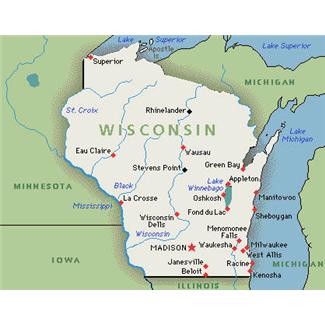
Let’s not stop. Keep up that indexing. My home state of Minnesota is about to be finished so I am now working on Wisconsin. When that is done I will choose another state. If you aren’t indexing, join us. Just visit FamilySearch.org and click on the 1940 census project logo in the upper right hand corner. It’s easy, it’s fun, and oh do you feel good after you submit each batch. I have indexed about 5,000 names but that’s a drop in the bucket compared to some of the loyal indexers.

Wouldn’t it be cool to have it all indexed by the Fourth of July as we celebrate our country’s birthday? Plus this is showing the record keepers, legislatures, librarians, archivists, and others that we are a powerful group. I suspect that some of those folks are also volunteer indexers for this project.

Those 18 searchable states already on those sites mentioned above are:

  • Alaska
  • Arizona
  • Colorado
  • Delaware
  • Florida
  • Hawaii
  • Idaho
  • Kansas
  • Louisiana
  • Mississippi
  • Montana
  • Nevada
  • New Hampshire
  • Oregon
  • Utah
  • Vermont
  • Virginia
  • Wyoming

Minnesota activities for those who crave history

My email today brought me the Local History News from the Minnesota Historical Society. I want to attend just about every event that was listed in it.

The spotlighted project in this issue is that of the Richfield Historical Society. Richfield is in Hennepin County and is a first-ring suburb located adjacent to the Minneapolis-St. Paul International Airport. The funds the RHS received from the MHS’ Minnesota Historical and Cultural Heritage Grants Program have been used to To make publicly accessible a collection of 7,500 photographs of Richfield housing, 1955-1957.”

Read the full newsletter with the extensive list of historical events in the state click here.