FGS 2013 Conference Week Overview

Are you planning on attending the 2013 Federation of Genealogical Societies 2013 Conference this coming August? As one of the conference co-chairs, I am excited to share this 2013 FGS Conference Week Overview. The actual conference website debut is just days away. Be sure to check www.fgsconferenceblog,org for big announcements! The conference hotels are filling fast and details on those are on the blog.

Monday, August 19
∙    Allen County Public Library Genealogy Center open 9 a.m.-9 p.m.

Tuesday, August 20
∙    Librarian’s Day (all day)
∙    Q&A panel and genealogy consultations in the afternoon, 2-5 p.m.
∙    Onsite registration begins, 3-7 p.m. (additional hours each day – see conference website)
∙    Allen County Public Library Genealogy Center open 9 a.m.-9 p.m.

Wednesday, August 21
(Focus on Societies Day)
∙    Plenary session
∙    Lecture sessions all day (27 sessions + 1 workshop)
∙    FGS Opening Social Evening sponsored by findmypast.com
∙    Allen County Public Library Genealogy Center open 9 a.m.-Midnight (extended hours!)

Thursday, August 22

∙    Keynote session
∙    Grand opening of Exhibit Hall
∙    Lecture sessions all day (31 sessions + 2 workshops)
∙    Vendor Demonstrations
∙    GenSpiration Sessions
∙    3 luncheons
∙    Extended Exhibit Hall hours until 7:30 p.m. (with door prizes!)
∙    Allen County Public Library Genealogy Center open 7 a.m.-Midnight (extended hours!)

Friday, August 23

∙    Lecture sessions all day (47 sessions + 2 workshops)
∙    Vendor Demonstrations
∙    GenSpiration Sessions
∙    3 luncheons
∙    “Journey Through the Generations with Our Veterans” local host societies evening event at the Allen County Public Library sponsored by FamilySearch
∙    Allen County Public Library Genealogy Center open 7 a.m.-Midnight (extended hours!)

Saturday, August 24
∙    Lecture sessions all day (47 sessions + 2 workshops)
∙    Vendor Demonstrations
∙    GenSpiration Sessions
∙    3 luncheons
∙    Allen County Public Library Genealogy Center open 7 a.m.-6 p.m. (extended a.m. hours!)

Sunday, August 25
∙    Farewell Brunch 9-11 a.m. (with door prizes!)
FIND MY PAST TV SHOW COMES TO THE US!

Good news and yet bad for my schedule! Are you craving a family history TV show? Just received this press release:

Tune in to findmypast.com to view episodes from the hit UK television show, Find My Past, now entering its second season. Each episode links living individuals to real historical events found in their family tree. Findmypast.com is the only place in the US where you can watch this show!

Register on findmypast.com for free and watch Find My Past episodes that aired in the last 30 days at no cost. Missed an episode or want to watch your favorites again? Findmypast subscribers can watch the all episodes for an unlimited time. Every episode will be available to watch on findmypast.com a week after it airs.

Register now!

Find My Past the TV show is an exciting series which unites ordinary members of the public with their ancestors. Each week in the new 10-part series, we reveal how three people are related to someone from a significant historical event by searching the ancestry records on findmypast. We follow their journey as each person discovers which of their ancestors played a role in modern history.

At the end of every episode, we unite the participants and reveal how each person’s family history is connected to monumental world history– such as the sinking of the Titanic, the WWI Christmas Truce, and the Great Fire of London.

Hosted by Chris Hollins of BBC Breakfast, Watchdog and winner of Strictly Come Dancing 2009, the hit UK Television series is now available for the first time to watch online, exclusive to findmypast registered users. The remaining five episodes will be shown after Christmas.

Tour Germany with genealogist Michael Lacopo

I have had a wonderful two weeks in Salt Lake City this January. What a way to begin 2013! Among the many friends I was fortunate to spend time with is Michael Lacopo from Indiana. I learned that he is leading a tour to Germany this coming October 14-22. I know he spent much of his time at the Family History Library on level B-1 researching in German records.

In Mike’s own words: “There are simply too many places in this wondrous country worth seeing! In many respects the “tour” is indeed geared as just a trip to Germany, and not for genealogists per se. But what is most important is to experience Germany and seeing the magnificent sites along this thoughtfully planned itinerary is going to be amazing. And, having the opportunity to do some research along the way will make this a truly unique experience for us all.” 

If you would like to learn more about the itinerary, cost, and other details click here for details on German Roots Tour 2013.

Genealogical Research Institute of Pittsburgh (GRIP) registration opens Feb. 7th

Registration for the Genealogical Research Institute of Pittsburgh’s 2013 edition begins on Thursday, February 7, 2013. Add it to your calendar so you won’t forget.

At noon, you can register for any one of the six courses. Preview the course description, coordinators, instructors, and session lineup at www.gripitt.org.

I am coordinating and instructing in Course I: Intermediate Genealogy: Tools for Digging Deeper. The other instructors are D. Joshua Taylor, MA, MLS and add Debra S. Mieszala, CG. 

I am also instructing in Course 3: Bridging the 1780-1840 Gap: From New England to the Midwest

http://www.gripitt.org/?page_id=653

The July 2012 GRIP was a smash hit and the set-up of the dorms, lecture rooms, and the cafeteria was perfect! The dorms were great for networking.

History lesson: Don’t try to sell official county records

Did Grandpa’s old trunk or Great Uncle Alfred’s house yield some sort of old record book from a county or state government? Maybe you have the volume labeled Marriage Record 5. Perhaps your cousin told that they had the original records of the early tax lists for the county. In many states the law prohibits the selling of such items whether online or at an antique shop. Many dealers know that they should contact the state archives or county officials if they come upon such an item.

An article in the Arkansas Times blog  tells the story of original tax records from Jefferson County, Arkansas that were being offered on Craig’s List for $10,000. Yes, you read that correctly.

Thank goodness someone saw the ad and contacted the proper authorities and the records are being returned to the county.

Read that blog post here.

Some older records that neither the county or state officials deem worth keeping may be ok for you to own. Check with officials. Better safe than sorry or embarrassed. Archivists and others check shops and online auction sites all the time for missing records.

Copyright applies to genealogy, too.

Have you read a good book or article lately on the history of a certain locality? Maybe your good friend Annabelle shared several of the recipes she drafted based on her years of cooking things everyone loves to eat. Did you just attend a genealogy seminar or conference and found the handout especially helpful?

So, you want to write an article about the history of that locality and decide that the author already wrote it the way you would want to do it. You just “share” those pages in your genealogical society’s publication and your name is listed as the author of the article because you added a few things. You cook a prize-winning apple pie based on Annabelle’s recipe and share the recipe and receive $500 for “your” recipe. Oops.

Another scenario might be that you heard a speaker and loved their PowerPoint slides and handouts/syllabus material. At the end of the seminar or conference, you decide to use those handouts in the classes you teach because they are better than those you have composed. Maybe you even asked the speaker for permission to use them.

In all these cases, it’s not your material. It’s not your many years of research, time, writing, checking out websites, and the associated expenses. It’s not your trips to archives, courthouses, or the hours upon hours of verifying website links that you verified just two months before when you last gave that lecture. It’s not your testing and retesting of the apple pie recipe that grew into the excellent product.

If you don’t have enough experience or education to compile your own material, article, book, or website, then you probably shouldn’t be doing that writing or teaching. If you don’t know enough about original documents at the courthouse, state or national archives, or how to put that knowledge together, then you need more experience.

I heard a lecture about 25 years ago and was intrigued by the topic. I began to research more about it at my state archives here in Minnesota. I read scholarly articles in historical periodicals. I researched in the applicable record group at the National Archives. At one point I realized I had more info from original material of the time period than that speaker had shared. Of course, it was only one handout and one-hour lecture but I knew that my work had reached depths beyond what this person knew. I had been working in original papers that hadn’t been touched since being archived almost 50 years previously.Then and only then did I craft my lecture and handout which have undergone numerous updates due to continuing research.

If you wish to share something with another genealogist, don’t just “take” what others have compiled. Do your own research. If you think that what that other person compiled is vital to others, don’t just copy. Promote that person’s lecture, book, or article. Have a blog? Quote a couple sentences and then give a live link to the website or place to purchase the item. Don’t pretend these are your thoughts. Give that other person the credit. That wonderful family tree you found online? Ask the author if you may abstract some information and share what you have with that person. Just copying that online or otherwise published tree might cause you problems if that author didn’t do careful research or cite their sources.

Your own creations are yours. The creations of others are theirs. It’s simple. Don’t take things from other folks. Copyright protection is already there once something original is created. Do you want someone coming into your home and taking your wedding or baby album? Do you want someone taking your family tree and posting it as if they had compiled it? Do you want another website sharing what has taken you years to put together? Sharing is great. It’s a part of being a family historian. But it’s still stealing if you take something that isn’t yours. I am grateful to everyone whose work has ended up helping me in my searching. That’s as far as it goes, though. It’s still their work.

This is my last post for 2012. I hope 2013 give me more fodder for positive posts. There is so much good in our field of family history.

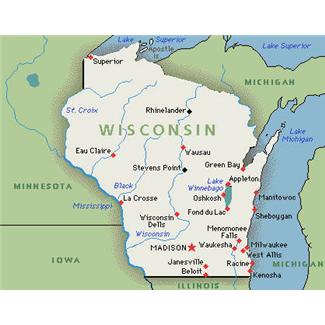
Wisconsin pronunciation guide is great for genealogy!

I was at a Christmas party this evening and had a fun time. Then I came back to my apartment and have been having fun on my computer. The Wisconsin State Cartographer’s Office has an online pronunciation guide to places all around the state. Not a written guide, but an audio presentation.

I do stumble over some of the names of Wisconsin places where my ancestors resided.

Pronounce these names and then see if you got them right by clicking here. Click on the arrow on the map and then jump around to see a variety of places. Then use the search box near the upper right corner to do more specific searches.

  • Berlin
  • New Berlin
  • Buena Vista
  • Oconomowoc
  • Peebles
  • Stoughton

I would give you more places to check but I need to go back to my own evening entertainment. Hmmm, how is Hurricane or maybe Louis Corners pronounced?

2020 census electronically? Census bureau modernizing?

Census takes on horseback over fields, avoiding snow or mud, missing people, and possibly asking the wrong person for the information might be changing further for the 2020 U.S. Census.

The [St. Paul] Pioneer Press has this story today:

“WASHINGTON—For the first time, the Census Bureau is giving U.S. households a chance to respond to government surveys over the Internet, part of a bid to save costs and boost sagging response rates in a digital age. The new online option will supplement the traditional census mail-out operation. It is a major shift for the agency, which has relied almost exclusively on paper forms since 1970 but is now moving toward a more Internet-based system after spending a record $13 billion on the 2010 census.”

The article further states “The once-a-decade count has traditionally missed hard-to-count groups such as minorities, the homeless and the poor, who also may be less likely to have access to computers.”

But it doesn’t offer an answer to that. It does include a quote that says it doesn’t mean that it alleviates the cost and work involved to reach those segments of the population.

 Click here to read the full story. 

Give the gift of genealogy education for the holidays!

Did you see the great post about this on the Federation of Genealogical Societies Conference News Blog on December 6th. Are relatives asking what you want for Christmas or another day? Do you want to give a special gift to someone else?

A special card has been designed that you can print and add cash, a check, or a promise to for the recipient to use toward the FGS 2013 Conference to be held in Fort Wayne, Indiana August 21-24.

Registration typically opens around February 1st but people have been asking how they can give a conference registration as a gift for one of the holidays in December. This card is the answer!

Read the full details and get the link to the card on the conference blog here.

FamilySearch Adds to Genealogy Community Fundraising Effort

If ever something deserved a WOW and a THANK YOU, this is it! The following is excerpted from a Press Release received today from the Federation of Genealogical Societies:

November 27, 2012 – Austin, TX. The Federation of Genealogical Societies (FGS) is pleased to announce that the War of 1812 “Preserve the Pensions” Digitization Fund received a generous donation this week of $250,000 from FamilySearch, a nonprofit organization and world leader in the genealogy community. The donation helps move the Fund closer to its goal of $3.7 million in donations to digitally preserve and index the War of 1812 pension and bounty land records.

The War of 1812, often called the “Second Revolution,” was a pivotal moment in our Nation’s history. Individual states struggled to become one nation after a long-fought Revolution, and the “American Experiment” was still at a precarious stage. The strength and courage of the patriots who fought in the War of 1812 ensured that our American Revolution did not end up as a mere footnote to British history and conquest. Instead, valiant farmers, merchants, seamen, fathers, and sons became soldiers to fight for what they and their fathers had believed in: their American home.

Now, two hundred years later, the War of 1812 “Preserve the Pensions” Digitization Fund celebrates their success, honor, and memories by digitally preserving the veterans’ pension records and making them freely accessible to all online.  The initiative will digitally preserve the 180,000 War of 1812 pension records (7.2 million pages) located at NARA, and create a searchable index online. Currently, NARA receives over 3,000 patron requests per year for copies of soldiers’ files.

“The Federation is extremely grateful to FamilySearch for their generous support of this enormously important endeavor,” said Curt Witcher, vice president of development for FGS. “Linking the genealogical community, marshaling that community’s resources, preserving and making accessible records that document our heritage—all are central to the Federation’s mission. FamilySearch’s very generous pacesetting gift helps ensure that this 21st century preservation and access project is a reality.”

David Rencher, chief genealogy officer for FamilySearch, said, “FamilySearch publishes over 400 million images of historic documents online for free each year, and is honored to support community efforts like the War of 1812 ‘Preserve the Pensions’ Digitization Fund to preserve and make additional high priority historic records more widely available.”

The War of 1812 files are very valuable to family historians and genealogists because they contain rich information such as:

  • Veteran’s name and age
  • Residence
  • Widow’s name and maiden name
  • Service history and dates
  • Military rank and organization
  • If Bounty Land was granted and information on those warrants
  • Marriage information
  • Death dates for soldiers and widows
  • Additional names of neighbors and comrades

Anyone can donate to the project at www.fgs.org/1812. Each pension page costs $0.45 to digitize. Each dollar of contribution digitizes two pages. Every little bit helps. To view the FREE images already online, go to: http://go.fold3.com/1812pensions

Family Search: https://familysearch.org/
Federation of Genealogical Societies: http://www.fgs.org/

Disclosure: I am a member of the Board of Directors of the Federation of Genealogical Societies