Tech companies volunteer to digitize Arlington National Cemetery records

 The newspapers this summer had been full of stories about the horrible situation at Arlington National Cemetery. The records and some burials at Arlington in Northern Virginia are a mess. I can’t imagine the pain that the families of the military dead are suffering since finding out that stones are missing, some may not be buried where they thought they were, and that the records are not clear nor in great order.

Today’s Washington Post reports that a consortium of high tech companies in that area have offered to help digitize the records.

As the article states “Warner (D-Va.) reached out to the tech council after the Army’s inspector general released a report in June that found that poor record-keeping and mismanagement led to the mislabeling of dozens of graves. As a result, the cemetery’s top two managers were forced to resign.”

“Kilberg said the companies would look at adapting the system used by the Department of Veterans Affairs at its cemeteries. Senate investigators, probing about $8 million spent on automating Arlington Cemetery’s system, said that officials from Veterans Affairs thought their technology could be used at Arlington, but cemetery officials declined to use it, saying they needed to build their own system from scratch.”

Click here to read the entire article.

Click here to read one of the earlier articles.

ProGenealogists acquired by Ancestry.com

Wow — interesting news release that just arrived from Ancestry.com:

Ancestry.com to Acquire Professional Genealogy Firm ProGenealogists, Inc.
PROVO, UTAH (August 6, 2010) – Ancestry.com Inc. (Nasdaq:ACOM) announced today that it has acquired leading professional genealogy research firm, ProGenealogists, Inc.
Based in Salt Lake City, Utah, ProGenealogists specializes in genealogical, forensic and family history research. During its 10-year history, the firm has become a trusted name in professional genealogy, finding great success with client research and expanding both its domestic and international capabilities.  As a part of Ancestry.com, ProGenealogists will continue to provide premier family history research to its existing clients while extending the Ancestry.com reach across the genealogy value chain.
“We are delighted to welcome ProGenealogists into the Ancestry.com network,” said David Rinn, senior vice president of strategy and corporate development for Ancestry.com. “With this acquisition Ancestry.com can better serve subscribers who are seeking dedicated, personal support in their family history research. As a natural service extension for Ancestry.com, we expect the addition of ProGenealogists will also enhance and expand the professional research offerings currently available through Ancestry.com Expert Connect.”
“Ancestry.com is definitely in a class by itself in the genealogy industry,” said Natalie Cottrill, CEO of ProGenealogists, Inc. “We are excited to become part of the Ancestry.com family and look forward to finding new ways to help more people interested in learning about their roots.”
Terms of the transaction were not disclosed. Ancestry.com does not expect the acquisition to have a material impact on its financial guidance as issued in connection with its second quarter earnings release on July 29, 2010.
ProGenealogists and Ancestry.com have worked together on several initiatives over the past few years including driving the research for the NBC television program, “Who Do You Think You Are?” which traced the family histories of celebrities including Sarah Jessica Parker, Lisa Kudrow, Brooke Shields, Susan Sarandon, Emmitt Smith, Matthew Broderick and Spike Lee. Ancestry.com will continue leveraging the expertise at ProGenealogists for similar initiatives in the future.

Dublin Evening Mail rare newspapers donated

Even though it’s still August 2d where I live, the August 3d edition of Irishtimes.com is reporting about some rare newspapers being donated to the Dublin City Library!

“RARE EDITIONS of the former Dublin Evening Mail dating back over 170 years are to be presented to the Dublin City Library tomorrow by an east Galway archivist and town councillor. The 157 issues of the newspaper date from February 5th, 1838, to December 31st, 1855, and have been part of the personal collection of Cllr Norman Morgan (Ind), a printer and member of Loughrea Town Council. First published in 1823, the Dublin Evening Mail was the longest running evening newspaper in Ireland when it last appeared in 1962.
Mr Burke purchased the issues some years ago at auction.”

Let’s hope they are indexed and/or digitized at some point. 

Important updates about the FGS Knoxville Conference

The 2010 edition of the annual four day genealogy conference of the Federation of Genealogical Societies begins in just 16 days in Knoxville, Tennessee. There are sessions for family historians of all levels of knowledge and with ancestors from just about anywhere. You might even find a distant cousin among the many conference registrants.

  • Online Registration closes at midnight August 8th. Walk-in registrations will be welcome at the conference.
  • The Conference Syllabus is online for registered attendees to print handouts for sessions in advance of the conference.Click here for instructions.
  • Some printed syllabus copies will be available at the conference but the supply is limited. Copies are $30. All registered attendees will receive a syllabus CD.
  • There will be a few tickets for luncheons available for sale at the Registration Desk. Tickets for the Thursday evening banquet at the Museum of Appalachia are close to sold out. Order your tickets very soon!
  • The FGS Conference News Blog has had many news updates in the last two weeks.

These are my favorite things about research repositories

Wouldn’t it be nice if we could take the most useful aspects of each of our favorite research places and combine them so that each place would have all that we love? (Yes, I know about reality, but I can dream, can’t I?) My ideal library, archive, and historical society would have:

  • Copy cards so I don’t have to carry change
  • Space and plugs for laptop computers — even next to the microfilm readers
  • Wireless internet accessibility
  • Lockers big enough for our bags that we must lock up
  • My favorite staff people
  • Staff that isn’t overworked
  • Finding aids that tell more about individual collections (online and off)
  • Comprehensive online catalog
  • Place to sit and reorganize your work for the day (where you can use the materials you had to put in the locker)
  • Onsite or close by place to eat
  • Record or book retrieval service that is not too slow
  • More materials on open shelves
  • Self-copiers
  • OK to bring in a flat bed scanner and a digital camera
  • Clear guidelines posted to remind us of them
  • Record retrieval forms that don’t take so long to fill out
  • Record retrieval request online (how many times do we need to fill our our name and address!)
  • Parking onsite or nearby and well lit
  • Public transportation at the door
  • Self-retrieval microforms
  • Clean and nearby restrooms (not on a different floor of the building)
  • Reasonable security features

I know there must be more features I love and will post those in the future. Do you have any suggestions for the perfect place to research? 

A mere twenty one days till the FGS Genealogy Conference

Just three weeks (or 3 weeks if you like the numbers better) or twenty one (21) days from today is the start of the FGS Conference for the Nation’s Genealogists in Knoxville, Tennessee. The event takes place from August 18-21 at the Knoxville Convention Center. I am excited about this event because it has truly been a wonderful group of people organizing this event.

The vendors are packing lots of good things to show and sell us in the Exhibit Hall, the volunteers are working on a million last minute tasks, the speakers are polishing up their lectures, the syllabus is being printed/burned to CD, genealogical societies are updating fliers and brochures, and that list of things being accomplished over these next few weeks is too long to print.

  • Have you registered? Click here to do that. You may still register at the door also.
  • Do you want to add a luncheon or other event to your prior registration? Click here and use the PIN you received when you registered.
  • Want to take another look at the special events for the week? Click here, here, and here.
  • Need more info on some of these events, Knoxville, vendors, speakers and other things? Scroll down the right side of the FGS Conference News Blog and check the labels list. Just click on those you want to read more about. Click here for the blog.

Is your non-profit organization about to lose that status with the IRS?

Lori Thornton posted a timely item on her Smokey Mountain Family Historian blog and I urge you to read it. Your genealogical, historical, or family organization’s non-profit status might be in jeopardy. As Lori said, “There are many historical societies, Friends of the Library organizations, cemetery associations, fraternal organizations, and DAR chapters among those in danger.”

That tax-exempt status may be gone simply because your organization did not fill out the proper forms and submit them to the IRS. Notices were sent to organizations, newspaper and online articles have talked about it, and for genealogical societies that are members of the Federation of Genealogical Societies, they received reminders in the FGS Voice.

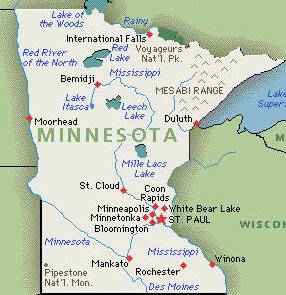
The IRS has extended the deadline so urge your organization’s board members to read Lori’s post and also this article from the July 27th Minneapolis St. Paul Star Tribune. That article states that the delinquent organizations in Minnesota alone total about 4,000!

FamilySearch: 100 million records indexed in the first half of 2010!

This press release was received from FamilySearch. Mighty impressive numbers!

22 July 2010

Online Volunteers Index a Whopping 100 Million Records Already This Year

FamilySearch Indexing is excited to announce that our dedicated volunteers have completed 100 million records in the first half of 2010, and is on track to complete a targeted 200 million by the end of the year. Patrons can search the completed indexes and images at pilot.familysearch.org.

More volunteers are always needed—particularly on international, non-English projects. New projects were added for Brazil, Canada, Jamaica, Mexico, New Zealand, United Kingdom, United States, and Russia.

Interested volunteers can start helping any time by registering at www.indexing.familysearch.org and selecting a project.


New Projects in the Past Month
·         Brasil, Minas Gerais—Church Records, 1706-1952
(In partnership with
Universidada Federal de Minas Gerais)
·         Mexico, San Luis Potosi—1930 Federal Censo
Recently Completed Projects
(Note: Recently completed projects have been removed from the available online indexing batches and will now go through a final completion check process. They will be published at pilot.familysearch.org in the near future.)
·         Chile, Concepción—Registros Civiles, 1885–1903 [Parte 2A]
·         Jamaica—Civil Births, 1878–1899 [Part C]
·         Jamaica—Civil Births, 1900–1930 [Part A]
·         U.K., Bristol—Parish Registers, 1837–1900 [Part C]
·         U.S., Military—1920 Federal Census
·         U.S., New York—1910 Federal Census
·         U.S., South Dakota—1910 Federal Census
·         U.S., Utah—1910 Federal Census
·         U.S., Utah—County Marriages, 1887–1966 [Part A]
·         U.S., West Virginia—1910 Federal Census
·         U.S., Wyoming—1910 Federal Census

Ancestry.com completes acquisition of Genline.se

Late this afternoon, MarketWatch carried a press release showing that Ancestry.com has completed the acquisition of the large Swedish research website Genline.se. I am speculating that this will soon give Ancestry World Deluxe subscribers access to “26 million pages of digitized Swedish church records spanning more than 400 years from the 17th to the 20th century.” I would think there will be some big announcements at the Federation of Genealogical Societies annual conference next month in Knoxville, Tennessee.

Click here to read today’s full press release.

Paying to view current obituaries?

Viewing current obituaries will soon be costing us more. Think about the fortune it costs for a family to have an obituary published in the newspaper. Now if someone else wants to check the newspaper for funeral details it might cost a few extra bucks. An article by David Brauer in yesterday’s Minnesota Post gives some details about new online newspaper metering. He later posted about a way to fool the system. I don’t want to give easy access to that link — you will have to find it yourself. I love to read the current obits for free and understand today’s economics, but it seems targeted at senior citizens to make a buck. Paying for access just to obits seems a bizarre way to begin. Why not sports articles or scores? Why not advertising?

The first user of the paid obit checks is LancasterOnline which says that “If you are a frequent visitor, staying in touch with our community, you may read seven obituaries for free each month.”

Here’s a link to another interesting column about the changing service.This includes lots of statistics on which the newspaper is basing its decision.

Just a couple days ago I told a group of fellow genealogists that it was interesting to read both the St. Paul and Minneapolis newspapers online from Friday evening until Monday morning and see little local news. It’s like living, crime, accidents, and other events stop for that time period. But we know it really doesn’t stop. The newspapers are only published once a day and on the weekends the staffing has been cut to the barest minimum. No longer are we being kept informed of our local area — well, unless a TV news story or an Associated Press article can be reported in the newspaper. Truly, the local flavor is going, going, going . . .

I guess I like the local funeral homes that also publish obituaries on their websites — and so far do so at no charge. After all, the families or the funeral home compile the obituary and send it electronically. In today’s world the work for the newspaper has been cut back. 

Many newspapers will not post news about upcoming events (even with text and photos provided for free) but will send a reporter to the event and publish the article after the event. How is that helpful? So, if I ran a newspaper — oh wait, I wear enough hats already.

So, my wish is that newspapers don’t become like the airlines. Keep good customer service. Charge if the bottom line requires. But give us lots of the news we are looking for. Tell us about upcoming events so that we may attend them. If you are going to charge to publish obits and then charge someone extra to look at them, charge equally for other info. Hmmm — do sports teams or city councils get charged to post news about their activities or events? But the grieving family does and then might have to pay to access what it paid to have published. Off my soapbox.