Historic Bridges

A website for just about anything. That’s the way it is in today’s world. If you love historic bridges you might want to check this website, Historic Bridges of the United States. The website states, “This is a database of 32,527 historic bridges in the United States of America, past and present.”

The pictures for some of the bridges are beautiful, but many more bridges are listed than have images. The site has instructions for providing pictures of bridges. The “News” section is interesting. Links on the right hand side of the website allow you to check by state, type of bridge, condition, and other categories including those on the Nation Register of Historic Places.

Of course I had to check Madison County, Iowa because of the Meryl Streep and Clint Eastwood movie, The Bridges of Madison County. Coincidentally, the movie is on a cable channel as I type this. I just checked on the date of this movie at imdb.com and found that it is a 1995 movie. That’s 14 years ago. My does time fly.

You might be able to find details and a picture of a bridge that was in the town where great granny lived.

New Digital Holocaust Collection free through October

This press release just arrived from the U.S. National Archives.

FOR IMMEDIATE RELEASE
September 29, 2009

National Archives and Footnote.com Announce New Digital Holocaust Collection

Collection includes Holocaust-related photos and records available online for first time

Washington DC and Lindon, UT -September 29, 2009 The National Archives and Records Administration and Footnote.com today announced the release of the internet’s largest Interactive Holocaust Collection. For the first time ever, over one million Holocaust-related records – including millions of names and 26,000 photos from the National Archives- will be available online. The collection can be viewed at: http://www.footnote.com/holocaust

“We cannot afford to forget this period in our history,” said Dr. Michael Kurtz, Assistant Archivist of the United States and author of America and the Return of Nazi Contraband: The Recovery of Europe’s Cultural Treasures. “Working with Footnote, these records will become more widely accessible, and will help people now and in the future learn more about the events and impact of the Holocaust.”

Included among the National Archives records available online at Footnote.com are:

  • Concentration camp registers and documents from Dachau, Mauthausen, Auschwitz, and Flossenburg
  • The “Ardelia Hall Collection” of records relating to the Nazi looting of Jewish possessions, including looted art
  • Captured German records including deportation and death lists from concentration camps
  • Nuremberg War Crimes Trial proceedings

Access to the collection will be available for free on Footnote.com through the month of October.

The collection also includes nearly 600 interactive personal accounts of those who survived or perished in the Holocaust provided by the U.S. Holocaust Memorial Museum. The project incorporates social networking tools that enable visitors to search for names and add photos, comments and stories, share their insights, and create pages to highlight their discoveries. There will be no charge to access and contribute to these personal pages.

“These pages tell a personal story that is not included in the history text books,” said Russ Wilding, CEO of Footnote.com. “They give visitors a first-hand glimpse into the tragic events of the Holocaust and allow users to engage with content such as maps, photos, timelines and personal accounts of victims and survivors through over 1 million documents.”

So that visitors may more easily access and engage the content, Footnote.com has created a special Holocaust site featuring:

  • Stories of Holocaust victims and survivors
  • Place where visitors can create their own pages to memorialize their Holocaust ancestors
  • Pages on the concentration camps – includes descriptions, photos, maps, timelines and accounts from those who survived the camps
  • Descriptions and samples of the original records from the National Archives

The Holocaust collection is the latest in a continuing partnership between Footnote.com and the National Archives to scan, digitize, and make historical records available online. The goal is to give more people access to these and other historical records that have previously only been available through the research room of the National Archives. This partnership brings these priceless resources to an even greater number of people and enables the National Archives to provide ever-greater access to these critical holdings.

About Footnote, Inc.
Footnote.com is a subscription website that features searchable original documents, providing users with an unaltered view of the events, places and people that shaped the American nation and the world. At Footnote.com, all are invited to come share, discuss, and collaborate on their discoveries with friends, family, and colleagues. For more information, visit www.footnote.com.

About the U.S. National Archives
The National Archives alone is the archives of the Government of the United States, responsible for safeguarding records of all three branches of the Federal Government. The records held by the National Archives belong to the public – and it is the mission of the National Archives to ensure the public can discover, use, and learn from the records of their government.

Professional genealogist or thinking about that occupation?

Today must be a big day for press releases. This just came from APG:

The Twelfth Annual Association of Professional Genealogists Professional Management Conference took place September 2, 2009, in Little Rock, Arkansas. The Syllabus is available for sale while supplies last at http://www.apgen.org/catalog/products.html for $20 plus shipping and handling.

The PMC presentations included:

  • Writing Professionally by Tom Jones, CG, CGL, FASG
  • Solving Mysteries for Money: the Forensic Genealogist and Private Investigator by Mary Ann Boyle, Ph.D., CG
  • The Bachelor: Reconstructing a Solitary Life Using Obscure & Far-Flung Records by Mary Penner
  • Talking to the World by Sherry Irvine, CG
  • Elements of a Good Client Agreement by Richard Camaur, JD, CG
  • The Genealogy Consumer: Who Pays for Professional Research? by Natasha Crain, MBA
  • Publish! And Supplement Your Income by Desmond Walls Allen
  • Bull’s Eye! Planning and Delivering a Winning Marketing Campaign by Heather Henderson
  • Get Paid For Your Passion: Becoming a Professional Genealogist by Elissa Scalise Powell, CG

Kathleen W. Hinckley, CG
Executive Director

APG presents awards

This press release was received today from the Association of Professional Genealogists. Congratulations to the award recipients!

APG HONORS FIVE MEMBERS FOR OUTSTANDING CONTRIBUTIONS AND ACHIEVEMENTS

WESTMINSTER, Colo., September 24 – The Association of Professional Genealogists (APG) honored five members for outstanding contributions and achievements at the 2009 Federation of Genealogical Societies (FGS) Conference held September 2-5 in Little Rock, Arkansas.

APG named Loretto Dennis Szucs as the recipient of the APG Professional Achievement Award. The award was created in 2007 to recognize a record of exceptional professional achievement with contributions to the field of genealogy through individual excellence and ethical behavior. Szucs has been involved in genealogical research, teaching, lecturing, and publishing for more than thirty years. Previously employed by the National Archives, she is currently executive editor and vice president of community relations for Ancestry.com. She has served on many archives and genealogical boards, and was founding secretary of the FGS. Currently, she serves as a director on the Board of the FGS.

Sandra MacLean Clunies, CG, received the Grahame T. Smallwood Jr. Award of Merit, an award honoring personal commitment and outstanding service to the APG organization. Clunies has served APG in several leadership roles since 1996, including two terms on the APG Board of Directors (2004-2008), National Capital Area Chapter President (2004-2008) and National Capital Area Chapter Vice President (1996-2000). In addition to her APG leadership
roles, Clunies has served as Director for the Genealogical Speakers Guild, Vice-President of GENTECH and an adjunct faculty member at the National Institute on Genealogical Research (NIGR) and the Institute of Genealogy and Historical Research (IGHR) at Samford University.

APG named Sharon E. Sergeant as the recipient of the APGQ Excellence Award, given to recognize excellence in submitted APG Quarterly material. Sergeant was honored for her article titled, “Holocaust Secret Exposed: How Forensic Genealogy Cracked the Misha Defonseca Case”. She is the past Program Director and current Secretary of the Massachusetts Genealogical Council. She is an active lecturer, author, and conference planner.

Certificates of appreciation were also awarded at the FGS in recognition of outstanding, continual or unusual contributions to APG, by a member or a non-member. This year, there were two recipients. Luke M. Muszkiewicz (of Pure Development, LLC) was honored for long-term contributions to the APG organization in the areas of technical advice, computer programming, web design, and customer service. Alvie L. Davidson, CG, was honored for continued generosity and involvement in the support, planning, and execution of APG’s 30th Anniversary Celebration and the 2009 Professional Management Conference.

The Association of Professional Genealogists, established in 1979, represents over 1,800 genealogists, librarians, writers, editors, historians, instructors, booksellers, publishers, and others involved in genealogy-related businesses. APG encourages genealogical excellence, ethical practice, mentoring, and education. The organization also supports the preservation and accessibility of records useful to the fields of genealogy, local, and social history. Its members represent all fifty states, Canada, and twenty-six other countries.

Contact: Kathleen W. Hinckley, CG, Executive Director,
Association of Professional Genealogists
P.O. Box 350998, Westminster, CO 80035-0998
Phone 303-422-9371, fax 303-456-8825, e-mail
[email protected]

Upcoming Events at the National Archives in the DC area

This press release was just received from the U.S. National Archives. Oh, do I wish I were in the D.C. area for several of these!

FOR IMMEDIATE RELEASE September 23, 2009

Special Programs Highlight National Archives Records in October

Washington, DC. . . In October, the National Archives will feature programs highlighting records from its holdings. All programs are free and open to the public. The programs will be held in the National Archives Building in Washington, DC, and the National Archives at College Park, Maryland. Both buildings are fully accessible.

Visitors to all programs in the National Archives Building Research Center (Room G-24) should use the Pennsylvania Avenue entrance, between 7th and 9th Streets, NW. The National Archives at College Park, MD, is located at 8601 Adelphi Road. For directions to both locations, see: http://www.archives.gov/dc-metro.

Tuesday, October 1, 11 AM, National Archives at College Park, MD,Lecture Room B,
Using Footnote.com for Jewish Research
Laura Prescott, content editor at Footnote.com, explores recently scanned and Holocaust-related records made available by the National Archives partnership with Footnote. She will demonstrate how to use the Footnote.com site to access these records. (This lecture is a repeat of the September 29 program.)

Tuesday, October 6, 11 AM, National Archives Building, Room G-24, Research Center
Documenting Death in the Civil War
John Deeben, genealogy archives specialist at the National Archives, explores death records created during and after the Civil War by the War Department, examining how they documented personal circumstances of soldiers’ deaths in various situations, including the battlefield and military hospitals and prisons. (This lecture will be repeated at the National Archives at College Park, MD, in Lecture Room B, on Thursday, October 8, 11 AM)

Wednesday, October 7, 11 AM, National Archives Building, Room G-24, Research Center
Introduction to Genealogy
Archives staff present a lecture on basic genealogical research in Federal records. This daytime lecture occurs the first Wednesday of the month: the next one is Wednesday, November 4.

Tuesday, October 13, 11 AM, National Archives Building, Room G-24, Research Center
World War II Enemy Aliens Program
Lynn Goodsell, archivist at the National Archives, discusses WWII enemy alien control programs and related records focusing on programs affecting individuals of German, Italian, and Japanese ancestry living in the United States and Latin America. (This lecture will be repeated at the National Archives at College Park, MD, in Lecture Room D, on Thursday, October 15, 11 AM)

Tuesday, October 20, 11 AM and noon, National Archives at College Park, MD, Lecture Room D
From the Records Book Group and Lecture
Following a related lecture at 11 AM, From the Records Book Group discusses Secret Empire: Eisenhower, the CIA, and the Hidden Story of America’s Space Espionage by Philip Taubman. Please check the Archives Shop (202-357-5271) for book availability and a special discount for book group participants. November’s book is The Whiskey Merchant’s Diary: An Urban Life in the Emerging Midwest by Joseph J. Mersman.

Saturday, October 24, at 10 AM, National Archives Building, Room G-24, Research Center
Introduction to Genealogy
Archives staff present a lecture on basic genealogical research in Federal records. This Saturday lecture occurs on select Saturdays each month: the next one is Saturday, November 21.

Saturday, October 24, noon-4 PM, National Archives Building, Room G-24, Research Center
“Help! I’m Stuck”
Not sure where to begin? Has a genealogical problem stumped you? Would you like to explore new directions in your research? On select Saturdays, an archivist will be available from noon to 4 p.m. to answer questions. Look for the “Help! I’m Stuck” sign at the Research Center desk. This offer occurs on select Saturdays each month: the next one is Saturday, November 21.

Tuesday, October 27, 11 AM, National Archives Building, Room G-24, Research Center
Civil War Medicine
Archives specialist Rebecca Sharp and reference librarian Nancy Wing discuss The Medical and Surgical History of the War of the Rebellion, 1861-1865. This published source contains details of Civil War medical and surgical procedures, and information about individual patients. (This lecture will be repeated at the National Archives at College Park, MD, in Lecture Room B, on Thursday, October 29, 11 AM)
New York locality based historians

Did you know that many localities in New York State have officially appointed historians?

I was doing some work on my brother-in-law’s DuBois genealogy this past weekend and came upon a newspaper article in the Poughkeepsie Journal that talks about the year long vacant job of Dutchess County Historian. This is in violation of state law. Economics is playing a part in the delay of providing someone to fill the job.

As the website for the Association of Public Historians of New York State relates, ” In 1919 New York State took the lead with the passage of legislation to create a legion of officially appointed historians in every town, village, city, borough and county across the Empire State. Unique in its concept, it provided every municipality with a distinctly identifiable person whose duties would be to ensure that the history of that area was collected, preserved and used to promote the history and heritage of our communities.” The website has a section “Find a NYS Public Historian” where you can check for the historian that represents your ancestral town, city or county. Some have only a mailing address but some do have email contact info listed.

The historian for some localities have an office and others operate out of their own homes. This person may be a genealogist or not, may have excellent files of area information, be able to connect you to other genealogists, may have direct access to the records you need, have indexes, or might be someone eager to help you. A few operate in name only. Not all have websites and may be reached only by letters sent by regular mail. You might find one with records and that allows you to make an appointment to visit in person.

  • The town of Greene (Chenango County) has a website with some good reminders for researchers.
  • The Bovina Town Historian’s 2008 report to the town officials is online.This report presents clues to what one active historian does.
  • The Wayne County Historian’s website includes details on costs, appointments, and holdings.
  • The town of Aurora has a website that details contact information and time for appointments. The website has the notes from a 2007 presentation about what a town historian does.

This latter website provided these statistics for the state of New York in 2007:

  • 62 borough and county historians
  • 938 town historians
  • 566 village historians

Finding manuscript and archival libraries

Is there a place in your family’s ancestral county in Minnesota that has information that might be helpful in your family history search? Is there a university library special collections department back in Massachusetts that might hold some old family papers? How about a college archive that holds old student records? Is there a separate archive for a county government? Many websites link to such repositories of original records, rare books, and other research materials. These are a few that lead you to specific places. I want to visit all of the places and look in the original records for family history. I know that in my lifetime I won’t be able to do that and also realize that all these places hold will not be digitized, indexed, and online. Have you ever held a dusty, faded leather bound volume of court records in your hands? Has your research uncovered an original diary that clears up some family stories?

See you soon in Orange County, California?

Family History Month is coming upon us quickly. In mid-October I will be making two appearances in southern California.

Wednesday, 14 October, Yorba Linda, California
An evening presentation for the Genealogical Society of North Orange County California. The title is Research Rewards in County Courthouse and Town Hall Records. Click here for details on the society’s events for Family History Month.

Saturday, 17 October, Mission Viejo, California
I will be presenting an all -day seminar Locating those Illusive Ancestors for the South Orange County California Genealogical Society. For the full flyer and registration details click here. My four topics:

  • Untrodden Ground: Sources You May Not Have Encountered”
  • The U.S. Federal Government: 13 Underutilized Resources”
  • Genealogy On The Internet: Make It Work For You”
  • Organizing Your Genealogical Materials “

Illinois State Genealogical Society Conference September 24th

This press release was just received from Lois Hanley of the Illinois State Genealogical Society:

“The Illinois State Genealogical Society is holding its Annual Conference, *Piecing Together the Puzzle of Our Past*, on Saturday, October 24, at Elgin Community College in Elgin, IL. Registration begins at 8:00 a.m. and the day concludes at 4:30 p.m. Registration is $35.00 for ISGS members and $45.00 for non-members (after Sept. 26, registration is $50.00), which includes a buffet lunch. Membership in ISGS is $30.00 annually. You may register online using Paypal at [email protected] or send a check to ISGS, P.O. Box 10195, Springfield, IL 62791-0195. Please include your email address and contact information.

The featured speakers this year will be Michael John Neill, Dr. M.Catherine Bird, Craig Pfannkuche, Lesley Martin, and Ann Wells. They will be addressing topics such as searching online, digital restoration of photographs, using railroads in research, organizing genealogical materials, using maps in family history research, using Federal Census returns, preserving family heirlooms, and finding women ancestors who may have married more than once.”

9/11

I visited Ground Zero in September 2004 and felt a special connection because of a large group of people who banded together to mourn and to celebrate life and the importance of family. We learned how quickly families can be changed forever.

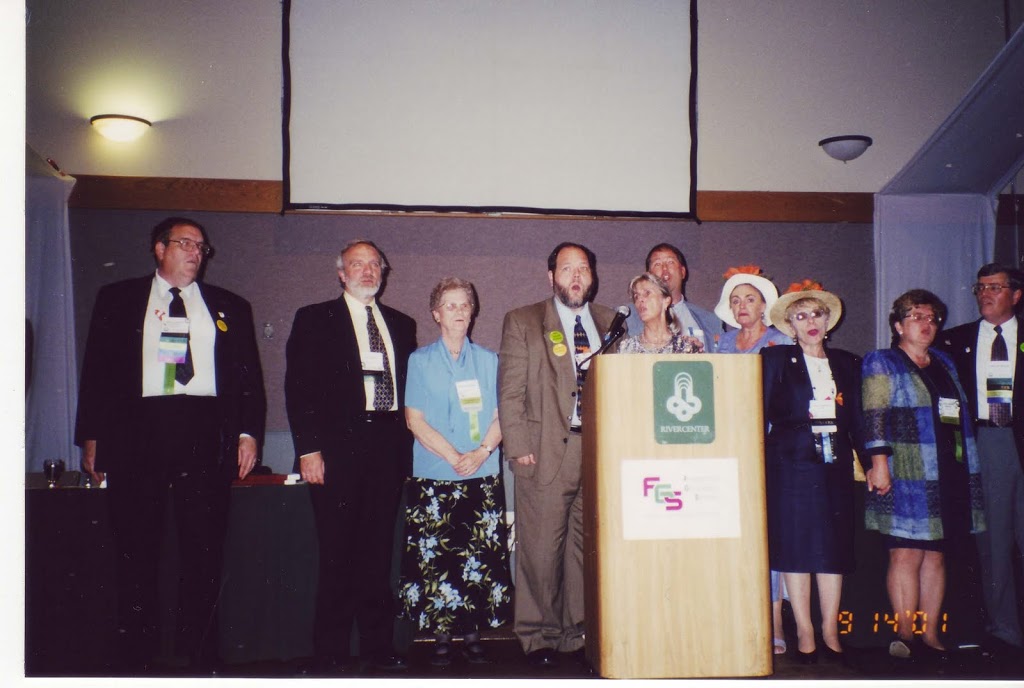
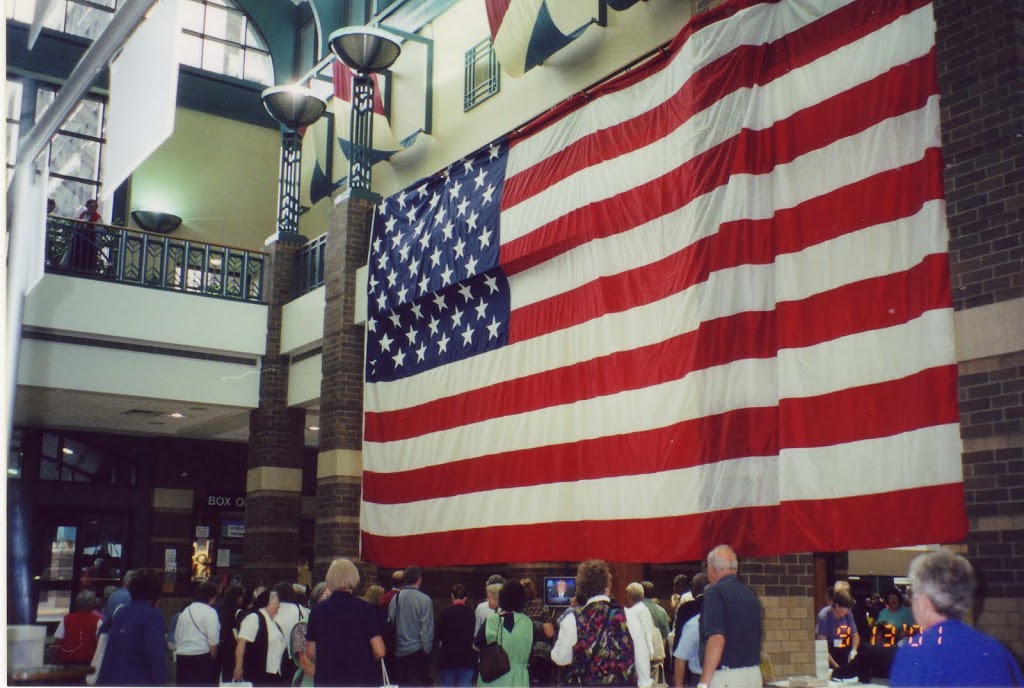
That banding together was at the Federation of Genealogical Societies Conference in the Quad Cities of Illinois and Iowa. The local host societies, the Scott County Genealogical Society and the Blackhawk Genealogical Society, along with genealogists from all over the U.S. and some from other countries, all banded together that week. We mourned, remembered, cried, hugged, laughed, wondered, and most of all learned that family comes in many forms.

At that conference and in the 8 years since I have learned how many of my friends have connections to 9/11 in some very sad and some even lucky ways. Just this past week at the FGS Conference in Little Rock there were conversations about the Quad Cities Conference. We will never forget on so many levels.

A couple years ago I did a post on the 9/11 week. You can read it here.