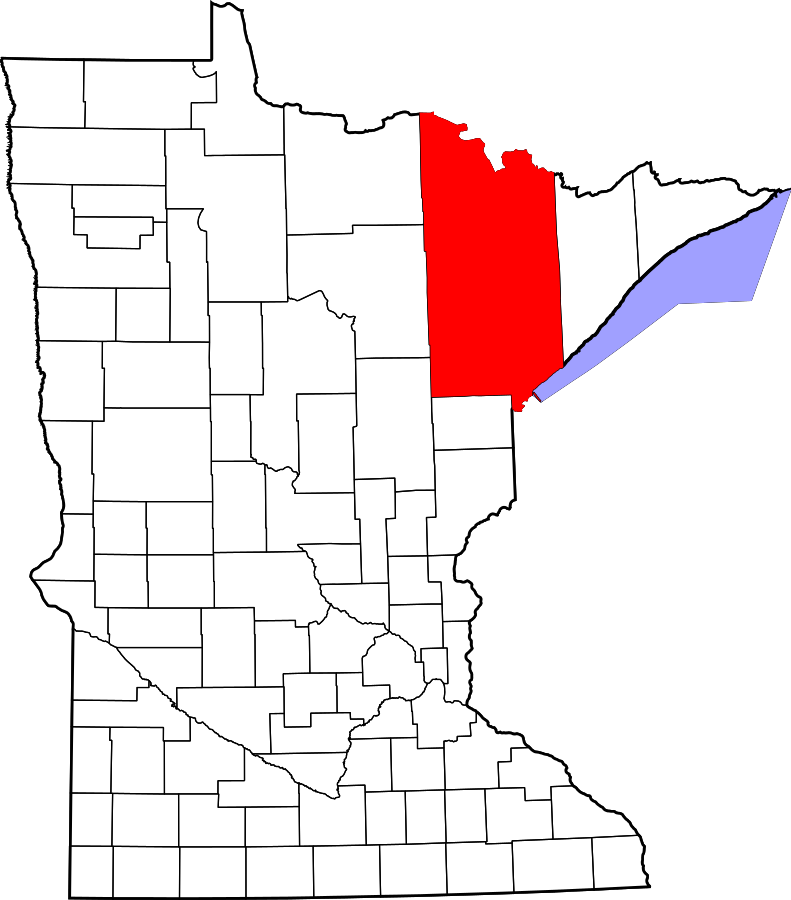
Washington County, Minnesota photos travel to North Dakota and back. Thankfully.

Where have your ancestral family photos ended up? With a relative, friend, several states away in a historical society, or in a box somewhere that was thankfully saved?

From today’s Pioneer Press:

“When a plastic Rubbermaid garbage can and a cardboard box full of unidentified black-and-white photos were dropped off at the Barnes County Historical Society in Valley City, N.D., last month, curator Wes Anderson started looking for clues.

He quickly realized many of the shots had a connection to Forest Lake, Minn.”

Wes Anderson did some digging and determined where to send the photos.

“Anderson tracked down Brent Peterson, executive director of the Washington County Historical Society in Stillwater. “They all looked to be of the same era,” Anderson said. “There were definitely a lot more trees there than here. Just by deductive reasoning and sheer stubbornness or accident, I got them to where they belonged.”

Anderson found the right person to send them to. Brent Peterson is a great guy, a champion of history and genealogy for his county, and one person who knows these are valuable to descendants.

Read more about the work to identify these photos and the fascinating chain of possession of them at TwinCities.com


Old Settlers organizations and their records

One of the presentations I do, Genealogical Goldmine: The Records of Old Settlers’ Organizations, is one that produces awe at the records, memorials, biographies, membership applications, and other material that often exist today.  Some of these organizations evolved into county and state historical societies.

These are generally  grassroots organizations or groups of old settlers of an area.  Many times when our families moved into a new area, especially when it was a frontier, they sought reasons to schedule a get-together.  The social aspect of the organizations was a prime factor in their development.  On many occasions these early settlers had survived tough situations and felt a special kinship, and a need to maintain contact.

Sometimes, as NEW settlers arrived in an area, the OLD settled residents began to feel encroached upon.  This may have been the impetus for some groups that evolved.  They began a group of old settlers with strict membership guidelines so as to make it impossible for these “new kids on the block” to join.  Other localities had very loose rules for membership and old settler gatherings became a community wide event.

You may find these called Pioneers of Washington County, First  Settlers of Green County, or some similar title. The organization might be a state level group, such as the Minnesota Territorial Pioneers. Some had annual publications, others had booklets that were distributed during a special gathering, others collected brief information, and some required membership applications and other records.  There were others that only kept lists of who attended the annual banquet, quarterly meeting, or Fourth of July picnic.  Check library catalogs, historical society finding aids, and other resources to locate possible organizational records for areas in which some of your family were early settlers.

These are several to get you thinking about what might exist for one of your ancestral areas. The United States has many such organizations and some are found in Canada.

  • Old Settler’s Club obituaries and memorials in 6 volumes at the Milwaukee County Historical Society in Wisconsin. These are indexed.
  • Records of the Harlan County Pioneer and Old Settlers Association (Harlan County, Nebraska) are at the Library of Congress and at the Nebraska State historical Society.
  • Old Settlers’ Society of Chicago records, 1855-1903 are at the Chicago History Museum
  • Oregon Pioneer Association records are at the Oregon Historical Society Research Library

Have fun investigating!


Valentine’s Day means registering for summer 2018 genealogy education at GRIP

The Genealogical Research Institute of Pittsburgh has 23 courses in THREE week-long learning opportunities in TWO locations (Pittsburgh, PA, and Amherst, NY) in 2018! Choose which week(s) to attend depending on your continuing education and research needs! Maybe you really need more immersion and can attend all three weeks!

  • La Roche College, Pittsburgh, Pennsylvania: 24-29 June 2018
  • La Roche College, Pittsburgh, Pennsylvania: 22-27 July 2018
  • Daemen College, Amherst, New York (Buffalo): 29 July-3 Aug 2018

February 14th, Valentine’s Day, is the opening day for registration. The registration hours are staggered for the three individual weeks.

At GRIP, my course, Intermediate Genealogy: Tools for Digging Deeper, is offered the latter two weeks with a variety of fantastic fellow instructors. In a future blog post, I will tell more about the special parts of this course and the instructors. It’s a course that provides great preparation for more advanced courses. It has been offered each year at GRIP.

Who attends GRIP? Researchers from all over the United States and Canada and even a few from other countries.

To learn more about GRIP: http://www.gripitt.org/

If you have questions about the intermediate course, contact me via the comments to this post as others may have the same questions as you!


Families come together via the naming of a railroad station in Mendota, Minnesota

As you may have read before, my Great Granduncle Louis F. Slaker worked for the “Omaha” railroad. The Chicago, St. Paul, Minneapolis, and Omaha Railway was later part of the Chicago and North Western Railway system. In his position as a Superintendent, one of his tasks was naming a railroad station in Mendota (Dakota County), Minnesota. He named it Cliff Station, though it was simply known as the Mendota station to many. If you stand in the town of Mendota, you look up a big cliff to the rest of Mendota. Turn around and a bit further there is a cliff towering over the Minnesota River. I am only assuming these cliffs were in his mind.

This is where ancestral families converge — in a way. My late mother-in-law and her siblings were raised at the top of the cliff in Mendota. I can picture them or their parents and other Rowan and Fee relatives boarding the train at this station. Little did she know that the station where she and others waited for the train was named by a relative of three of her future grandchildren.


This entry is from Minnesota Place Names: A Geographical Encyclopedia. 3rd Revised & Enlarged Edition. Saint Paul: Minnesota Historical Society Press 2001. Much has been added to Warren Upham’s original excellent compilation that was published in 1920, Minnesota Geographic Names: Their Origin and Historic Significance.

My Salt Lake Institute of Genealogy and Family History Library 2018 packing list

I already have a suitcase opened in my apartment and am adding things to it for my time at the 2018 Salt Lake Institute of Genealogy and some time at the Family History Library. This post is an update of one I shared in the past.

It’s a January ritual for me and several hundred other family historians. This includes people from all over the U.S., Canada, and some other countries. The week-long Salt Lake Institute of Genealogy (SLIG) begins on Monday, January 22nd with a special reception and registration the night before. That’s when most students pick up their syllabus for their course.

Some arrive before SLIG in order to research at the Family History Library (FHL) where it’s a joy to simply pull films out of a drawer. Yes, some students live in the greater Salt Lake City area, but often the duties of daily life interfere with getting downtown to do the research. Others stay after SLIG and many scurry over to the FHL after classes each day.

As many of you know, I coordinate and teach the intermediate level Taking Your Research to the Next Level that many have taken before venturing further into more advanced courses. In this course, visits to the library are a must as students work on the week’s class project which is the main homework. The students in this course also have an opportunity to sign up for a private consultation with me or the other instructors.

In addition to preparing for SLIG, I am reviewing client files to see what must be accomplished at the FHL and also some of my own files for a bit of family research. As of the early hours of January 1, 2018, I have a few new leads on my own family. This means I am listing films that I want to view while I am there and can easily move from a filmed index to a filmed record or move to another film when I make a great discovery. Bring along a couple flash drives so that you can make digitized images from the films and transfer to your own flash drive. The flash drive is also important if you find something online while using one of the many library computers and subscription databases.

I bring along some granola bars and apples for quick breakfasts and daytime snacks.  A Harmon’s grocery store is about 3.5-4 blocks from the Hilton Hotel where SLIG is held. Another option is to take the TRAX light rail to Smith’s at 400 South at 600 East. Smith’s has much more than groceries including clothes, jewelry, and even tools should you need a wrench for some reason! My main reason for going to the grocery store is to get lots of water and fresh fruit. The FHL allows us to bring in a closed water container.

My packing list includes plenty of lip balm and lotion since the air is so dry in SLC.  I bring my computer, cords, and my Fopydo for taking pictures from books using my phone. What is a Fopydo?  Check my blog post on that. You will likely see a few of us using one when we are on the third floor of the library. For more info on scanners and cell phone apps for scanning, check this Facebook page Technology for Genealogy.

Light sleeper? Bring earplugs and a eye mask. Good sleep makes a better learner and researcher. The rest of what you need to bring is the standard stuff for any trip. If you don’t have a packing list, start one now and check online for lists others have posted on websites and I have seen some tips on the SLIG 2018 Facebook page. It’s terrible to waste FHL time by running to the store again to purchase something you forgot to pack.

Of course, your packing list will differ depending on whether you fly or drive. If you have other suggestions, please add them in a comment so that others can learn from your expertise.

  • a couple clothespins to close a bag of snacks
  • snacks for between lectures
  • comfortable shoes (2 pair so one can rest for a day)
  • laundry bag
  • sweater or lightweight jacket in case a classroom is chilly
  • throat lozenges or hard candies in case you get a scratchy throat
  • chargers and a power strip for phones, tablets, and computers
  • cable lock for computer
  • surge protector (I use this one goo.gl/Z3Ujno that was suggested to me by Cyndi of Cyndi’s List. It works great at the FHL)
  • Flash drives/USB drives/thumb drives
  • account passwords
  • business cards so others can find you after SLIG (Add the surnames you are searching)
  • don’t forget to bring any over the counter or prescription medications
  • your own pillow if you can’t sleep without it!
  • power strip
  • tissues
  • curling iron
  • some hangers
  • Some paper towels (you really don’t need a whole roll)
  • couple file folders for any extra handouts
  • pad of paper and pens/pencils
  • computer or electronic tablet for taking notes and for homework
  • highlighter for marking items in syllabus
  • clothing (definitely not optional)
  • headphones (you may need quiet for a while or to listen to a different kind of music than your roommate)
  • soap, shampoo, conditioner, hairbrush, comb, lotion razor, shaving cream
  • toothbrush, toothpaste, deodorant, and other toiletries that you need
  • makeup
  • prescription and other medications
  • disinfectant wipes
  • lip balm, lip balm, lip balm (get the hint? LOL)
  • post-it pad – leave notes for yourself or a roommate
  • winter hat, gloves, scarf, and coat
  • umbrella (it has rained at times)


Eden Prairie, Minnesota (Hennepin County) roots? Ongoing oral history project

Eden Prairie, Minnesota is a suburb of Minneapolis. It was once a rural area but has grown into a place with a large population and the stores and activities to match. I lived there for a couple years and my ex-husband worked there for many years. There isn’t an old main street with quaint stores, but there is a historical society that is trying to preserve memories. Thus, its oral history project.

“The Historical Society’s Oral History Project, entitled “Eden Prairie Remembers Its Mid-Century Transformation,” set out to “explore the steps and driving forces of Eden Prairie’s journey from a rural to suburban community by interviewing those who lived the history.”

To learn more, read full story in the Eden Prairie News.

2018 is a fresh year of genealogy presentations

I’ve already been booked for presentations throughout 2018 but do have some open dates if your group is in need of a speaker. Contact me via  email at PaulaStuartWarren  at gmail.com. My topics and descriptions are found right on this website under Speaking. There will be something for you to learn, no matter if you are a beginning genealogist or have more experience.

A few to start off the year renewing our zeal for family history:

  • January 11, 2018, Hudson, Wisconsin, 10:30
    Hudson Area Public Library sponsoring my presentation, “The U.S. National Archives: The Nation’s Attic”
  • January 22-26, Salt Lake City, Utah
    Salt Lake Institute of Genealogy (SLIG) I coordinate and teach in the intermediate level course, Taking Your Research to the Next Level. Some seats are still available. This course will not be offered in 2019 so sign up now for 2018.
  • February 10: Mesa, Arizona
    Arizona Genealogical Advisory Board (AZGab) seminar where I will do two presentations that afternoon.
  • March 17, 2018, Red Wing, Minnesota, 1:00 p.m.
    Goodhue County Historical Society and Red Wing Community Education sponsoring my presentation, “Controlling Chaos: Organizing Your Genealogy.”  Call 651.385.4565 to register.

Each of my presentations is accompanied by an extensive handout and I am available to answer genealogy and history questions.

Contribute to on the spot street corner history in La Crosse, Wisconsin

A continuing education class that is open to anyone at the University of Wisconsin-La Crosse is inviting people to help complete an award-winning oral history project that accommodates self-guided tours. The class will add stories to the 50 already recorded. How do you access these self-guided history tours? At orange street signs in downtown La Crosse, simply call a toll-free number and hear the recording that matches the area around the  spot where you stand! What an easy way to learn history.

For details on the upcoming January class and more on the story, visit the La Crosse Tribune.


The Weinermobile and Oral History

I bet more than a few of you are scratching your head at the connection in the title of this post. As I read an article today that connected those two items, a certain song from a commercial began to run through my mind and hasn’t stopped since. O-S-C-A-R  M-A- . . . and now I hope you have this earworm!

The headquarters of the Oscar Mayer company has moved back to Chicago from its 1919-2015 home in Madison, Wisconsin. One of the Weinermobiles has been donated to the Wisconsin Historical Society. Other artifacts were donated but my mind immediately wondered about the company records! No mention of those in the article.

“. . . the Wisconsin Historical Society announced efforts to collect memories of Oscar Mayer from company workers and retirees, families of Oscar Mayer workers and anyone who has a story they want to share about the frankfurter and bologna purveyor.”

“Anyone can share a memory of Oscar Mayer online — visit oscarmayerstories.com — or record a video or audio and upload it to the website. Or simply write it down and send it via snail mail. Oral histories will be accepted through Feb. 28. All stories will be archived and accessible by the public.”

Read the full story in the Milwaukee Journal Sentinel of 5 December 2017.