Jewish ancestry? An online beyond the basics course

I saw a notice about this in Nu? What’s New? It’s the “The E-zine of Jewish Genealogy From Avotaynu.”

A long-time friend, Gary Mokotoff, is editor of this e-zine.  Minnesota has many areas with large Jewish populations. I grew up in such an area, the Highland Park area of Saint Paul.


Complex Genealogical Research in the U.S.
Looking for someone in the U.S.?

If despite basic online research you have not yet found the Hebrew names, birth year or town for your U.S. immigrant consider this course as it focuses on the more complex documents our ancestors generated including Naturalization, Passports, Death Records (Probate, Obituaries, Cemeteries), Newspapers, City Directories, Immigration Ports other than Ellis Island, Major Archives and Libraries, Military records, Internet Research and miscellaneous State and Federal Government Records.

Read the full description, cost and enrollment info in this course from JewishGen Education here.


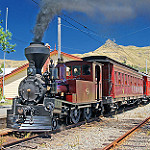
Online & On Track: Railroad Indexes and Finding Aids on the Internet (Webinar)

“Learn about online personnel and payroll records, indexes, books, railroad employee and union magazine indexes, inventories of railroad records, indexes of insurance claims, identified photographs of people, trains, and stations, architectural drawings, and links to other free websites and finding aids. Some of these lists give a person’s name, birth date and place, railroad jobs held, and more. An extensive handout gives links to these and many others.”

I recently recorded this webinar for Legacy Family Tree webinars and it’s available in the subscriber library. In case you don’t know, anything to do with railroad records and history is a hot topic with me.

Not a subscriber? It’s an affordable cost for this huge library of webinars. Click here to learn more and start your subscription. You also get access to the syllabus for the presentations.

For this presentation, the syllabus is full of live inks to the material discussed. I am an affiliate of Family Tree webinars and the small percentage I receive from subscriptions allows me a bit extra to help with the costs of researching and updating presentations.


Descended from immigrants to the U.S. from 8 other countries

My ancestry is truly a mixture of immigrants. My ancestors came to the U.S. from eight (8!) other countries. I am so honored to be their descendant.

They came to the United States from:

  • Canada
  • Denmark
  • England
  • France
  • Germany
  • Ireland
  • Scotland
  • Sweden

DNA testing has shown that some of their ancestors had roots from other places. I am more Irish than anything and that might upset my English Great Great Great Great Grandfather George Copping. He wasn’t too fond of the Irish immigrants in the area of Rawdon, Quebec, Canada. He was an immigrant himself! Nor did he like the French-Canadian Catholics.  His Granddaughter Margretta Georgina Reinhardt married Arsene Daoust (Sam Dow) one of those French-Canadians!

The real point of this post is to show that my ancestors made the effort to travel to the U.S. and it wasn’t easy. They sought something better or may have been escaping something like the famine in Ireland. I am grateful that they made the choice. I am also grateful that I discovered researching family history. Not only was it my hobby to learn about my own family but I believed in education and standards and it became my occupation.

I love Midwestern research and I love Native American research. That has been a main part of my research work for more than 20 years and I am fortunate to work with my oldest son in that work. We make a special team with our experience in many aspects of Native American research and enrollment issues.  Neither of us has any Native American blood but have come to respect those who do and love our work to help others learn more about their ancestry.

Think a bit about your own ancestral ties. Immigrant ancestors to whatever country they chose or to a country you chose?

Family Tree University Spring Virtual Conference: Join in for my keynote presentation

2018 Spring Virtual Conference from Family Tree University: Get the Skills to Break Down Your Brick Walls

“With 15 presentations, a live keynote and Q&As, this 3-day virtual conference is designed to help you maximize your research time. By the end of those 3 days, you’ll be ready to combine new skills and resources to overcome your biggest brick walls.”

I am happy to be doing the live keynote presentation on April 7th:

Passionate About the Past (Genealogy isn’t just a hobby; it’s so much more)

Tune in live for this keynote on April 7th at Noon ET (11am Central, 10 Mountain, 9 Pacific)

Get the full details, pricing, and other information here.


Findmypast joins with Twile

News from Findmypast and Twile

“Creators of the visual family history timeline and winner of two RootsTech innovation awards, Twile have joined the Findmypast family. And we’re just a little bit excited to finally be able to announce the good news! This acquisition reflects our drive to innovate and enhance the family history experience by providing new ways to share your family’s stories.

Twile enables you to create interactive timelines of your family memories and set them against the context of world history, providing new and engaging ways of telling your family’s story via beautiful infographics and other visualisations.”

Read the full details here.


15,000 MyHeritage DNA kits free to adoptees and birth families

MyHeritage “announced today the launch of a new pro bono initiative, DNA Quest, to help adoptees and their birth families reunite through genetic testing. As part of this initiative, MyHeritage will provide 15,000 MyHeritage DNA kits, worth more than one million dollars, for free, with free shipping, to eligible participants. Participation is open to adoptees seeking to find their biological family members, and to anyone looking for a family member who was placed for adoption. Preference will be given to people who are not able to afford genetic testing. The first phase of the initiative is open to USA residents, involving adoptions that took place in the USA. Application opens today on the project website, www.dnaquest.org, which includes detailed information about the initiative. ”

Read the full press release here.


It’s almost here! 1 day left till GRIP genealogy courses registration opens

That’s it – just one day left. Actually, less than a full day till online registration begins for each of the three weeks of education near Pittsburgh Pennsylvania and Buffalo, New York.

Read my February 11th blog post below for more details, especially on the intermediate level genealogy course I coordinate. It’s a great way to start your GRIP experience and then move on to other courses with a great foundation of learning.

Be sure to have the registration details already in hand before you log on to sign up!


3 days till registration opens for 3 weeks of excellent genealogical learning at GRIP

Three (3) days from now is Valentines’s Day. MORE IMPORTANTLY, it’s the opening day of registration for this summer’s three (3 ) weeks of genealogical educations. This summer, the Genealogical Research Institute of Genealogy is offering an extra week and an extra location.

June 24-29, 2018: 8 courses at LaRoche College in Pittsburgh

July 22-27, 2018: 8 courses at LaRoche College in Pittsburgh

July 29-August 3, 2018: 7 courses at Daemen College, Amherst, New York (Buffalo)

During the second week in July and the week in Amherst, I will be joined by other instructors as we present Intermediate Genealogy: Tools for Digging Deeper.  Not quite at the intermediate level yet? We will guide you along in between classes. Beyond the intermediate level but need a refresher? We will reopen your eyes and mind during the week and get you back on track in today’s world of genealogy.

Exhausted online resources? You may learn about many more. We all reach the point where we need to learn about other resources and delve more deeply into those we already know. This is the way we take our research to a higher level, solve problems, and advance our family history. This course provides in-depth learning on 19th-21st century U.S. resources and the methodology for using them. We probe deeper into the content, origin, location, and interpretation of records. It’s not just listening to lectures, but interactive classroom time that takes you beyond basic research tools.

Your presence will add to a great week of learning, sharing, and fun. Yes, we have fun, too. A great camaraderie develops in our classroom and with other GRIP Students. The intermediate course students get to do some out-loud thinking and planning, have the chance to have their own research challenge worked on as a group, and some other surprises.

If you register for the intermediate course, watch your email late this spring for a special way to participate and the chance to have one of your genealogical conundrums evaluated, research paths given, and perhaps solved! I will even share some packing tips for those coming from out of town.

For full details on courses and registration, visit the GRIP website and get that computer ready for February 14th. Each week has a special registration start time for this Wednesday.