Next event for me: Illinois State Genealogical Society, Oct 23-24

In just under two weeks, the Illinois State Genealogical Society is having its fall conference. The place is Oak Lawn, Illinois, which is a southwest suburb of Chicago and easy to get to. ISGS conferences are special to me, but to learn why, you will have to be there in person to hear the story. Some people do know it, but I hope they keep it quiet.

Wikipedia says “The top five ancestries reported in Oak Lawn as of the 2000 census were Irish (30.4%), German (19.5%), Polish (19.3%), Italian (9.7%) and English (4.4%).” I need to do some checking in my own files to see which of my collateral relatives lived there in the early 1900s.

The conference is at the Hilton OakLawn/Chicago. The lineup of speakers offers something for everyone. I will be presenting 4 sessions on Saturday.

ISGS arranged for a special rate at the hotel and I urge to stay there, sleep a bit later each day, and then take a quick elevator ride to the sessions!

For details on the topics, speakers, banquet, and hotel, check the ISGS website.


Chronicling America free newspapers: now 10 million pages strong!

I love good news. This news release from the Library of Congress shares some. If you haven’t used Chronicling America, head over to the website and begin searching in this FREE resource. Not every newspaper is there, but I did find a story about my Great Great Grandmother Marie Slaker falling down stairs at a family residence here in St. Paul!

“Online Resource of Historic Newspapers Posts 10 Millionth Page

 Chronicling America, a free, online searchable database of historic U.S. newspapers, has posted its 10 millionth page.

Launched by the Library of Congress and the National Endowment for the Humanities (NEH) in 2007, Chronicling America provides enhanced and permanent access to historically significant newspapers published in the United States between 1836 and 1922. It is part of the National Digital Newspaper Program (NDNP), a joint effort between the two agencies and partners in 40 states and territories.”

Read the full news release with interesting statistics here.


Intermediate Genealogy Course in January: It’s for you!

  • Are you not sure where to go next after exhausting many online resources?
  • Do you think the are more online resources you don’t know about?
  • Wish you had a highly experienced genealogy professional with whom to discuss your research?
  • Want to take other courses at an institute but know you aren’t quite ready to keep up?
  • Thinking about learning more about analysis and methodology?
  • Need to know you do have a pretty good grasp on genealogy?
  • Need to learn in-depth about a number of records?
  • Wish you had some assistance at the Family History Library?
  • Been away from family history research for a while?

Then join us at the Salt Lake Institute of Genealogy’s intermediate course from 11-15 January 2016. For all these reasons and more, this is the course for you. SLIG’s Course Intermediate U.S. Records and Research, Part II will handle all those questions and more.

Part 1 was offered this past January and will return in 2017.  These two parts do not need to be taken in any specific order. Students that took this course years ago, return for a refresher when a number of years has passed! Plus the session content and the syllabus are always being updated by the instructors. The changes in the field of family history are numerous and often.

This course offers greater understanding of records, learning more unusual resources, one-on-one consultations at the Family History Library, a computer lab session, and some surprises.

Please join me, Debbie Mieszala, CG and Josh Taylor, MA, MLS, for a great week of learning, some fun, and camaraderie that is amazing.  If you have any questions, please add it in the comments for this post.  If you are thinking winter is not the time to be in Salt Lake City, you couldn’t be more wrong. It’s warmer than my home state of Minnesota. The sidewalks and streets are kept clear if there is snow. (I have been there many times in January when we barely saw snow).

More than 600 of your fellow genealogists have taken this course over the years. What are you waiting for? Visit the Salt Lake Institute of Genealogy website to learn more and to register.


ISFHWE 2016 Excellence-in-Writing Competition Now Open: Your Turn?

The International Society of Family History Writers and Editors (ISFHWE) has an annual writing competition that is broad in nature. Whether you write for magazines, newspapers, journals, websites, or blogs, it’s time to think about entering the 2016 Excellence-in-Writing Competition.

The competition is open to both members and non-members of ISFHWE. Members of ISFHWE receive a discount on the entry fee. The deadline for entries is 15 June 2016.

Full information on the competition and the six categories of writing is available on the ISFHWE website. 

October: Family History Month and American Archives Month

What a great combination of designations for this month. In many places, the temperatures are cooling down. We aren’t going on as many picnics, to the beach, or using the swimming pool.  Children are back in school. The genealogist’s minds turns to FAMILY HISTORY.

October seems fitting to be both Family History Month and American Archives month. I usually don’t celebrate chewing gum day or ice cream month. The former two are more worthy of celebration and doing something concrete to celebrate.

What is more perfect than working on your family history in an archive! A couple weeks ago, I wrote about “When Is The Last Time You Were A Tick Mark” and this is the month to be sure you are marked as present!

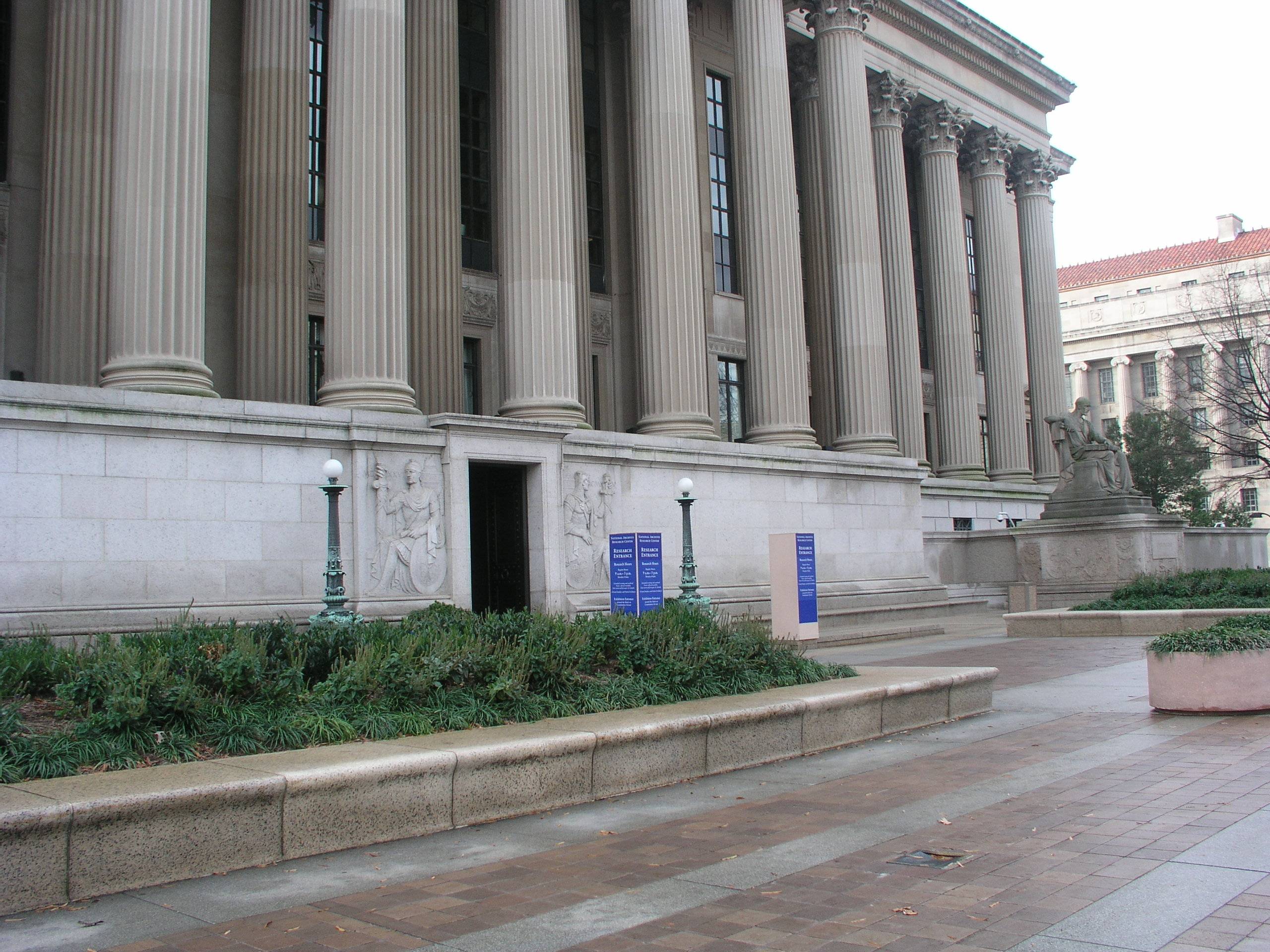
Go to the website of a state archive or maybe a college or university archive. Perhaps one of the National Archives locations. Study any catalogs, finding aids, newsletters, digitized images, and start a “To Do” list. Do you need to work at one too far away for this month? Plan a trip for later this fall or into 2016.

I am going to celebrate this month by presenting family history seminars in Arkansas (Arkansas Genealogical Society), Alaska (Anchorage Genealogical Society), and Illinois (Illinois State Genealogical Society). I will also be doing in-person research at some archives in Washington State. What is your genealogical society doing to celebrate?

It’s time to firm up your plans to celebrate Family History Month and American Archives Month. Do your own research, join a genealogical society, help someone to get interested in family history research, thank an Archivist, sort and file those stacks of paper in your work area, and remember to let your legislators at all levels know the importance of archives, preserving records, granting access to records, and funding places needed to research all facets of history.

My Family Tree DNA ethnic makeup

My FTDNA ethnic makeup is not all that different from that on AncestryDNA as shown in the preceding post except that FTDNA doesn’t show my Danish and Swedish roots. My oldest son’s ethnic makeup is 100% European and does show some Scandinavian. On Ancestry I have 7% Iberian Peninsula and this FTDNA maps shows that I have that makeup, too. Time for lots more research and uploading all these results to GedMatch.


FTDNA list and map

My Ancestry DNA pie chart. Irish is the highest group.

I have done DNA testing with Ancestry.com and FamilyTreeDNA. These show I am more Irish than anything. That’s not a surprise. I know that these estimates could change as the number of people tested grows. I have a bombed ancestral church, a church that neglected to keep records for a number of years, and some other quirks, so I appreciate these estimates.  My research to this point shows that I am truly a mixture of backgrounds. Of my 16 great great grandparents, only 7 came to the U.S., 2 to Lower Canada, and 1 was born in French Canada and may have come to the U.S. Of course, the research on all of them is ongoing. I want to know more about each individual.

Paternal Great Great Grandparents

These eight ancestors were born in Scotland, Scotland, Germany, Germany, Denmark, Denmark, Sweden, and Sweden

Maternal Great Great Grandparents

These eight ancestors were born in Ireland, Ireland, Ireland, Ireland, Ireland, Ireland, French Canada (definitely French), and the last great great grandmother is 1/2 English and the other half may be German.

Ancestry.com shows:  (The FTDNA results are in the post above this one)

Ancestry DNA estimate pie chartAncestry DNA list

When is the last time you were a tick mark? It serves many purposes.

I am at the Family History Library in Salt Lake City for several days. There are still some open seats here for you. The microfilm readers and computers are busy. I see many people pouring through books that are not yet digitized. It feels good to be back here.

When is the last time you visited a library, historical society or archive? I know some readers may be house-bound and frustrated that you can’t get out, but for the rest of you, you are missing some great research.

An in-person research visit does serve a variety of purposes:

  • You find materials that are not online (and may never be!). It might be a book, film, or a file folder of family information.
  • You become a tick mark on the patron count that shows those in charge the repository is still viable. This even means the little local history room in the rural county library. It can affect funding or even keeping it open.
  • You view your research in a different setting. Often that leads to more research ideas, perhaps a breakthrough.
  • You might discuss some research with someone sitting across the table from you and make a new genealogy friend. Heck, that person may even have a connection to your Carpenter family back in Pennsylvania.
  • No buzzer tells you to take the laundry out of the dryer.

Where are you going this week or next? I challenge each reader to research at a library, courthouse, archive, or historical society at least once a month. I will update you on my research visits in a few months. We need to keep these places open, accessible to researchers, and well-funded. Be a tick mark.

Presenting at 4 genealogy seminars in 5 weeks: MN, AR, AK, and IL

Those state abbreviations in the title are listed for two reasons. First, to test you! Many people use AK for Arkansas, but AK is Alaska and AR is Arkansas. Second, I will be in those four states on weekends near each other this fall. I guess Minnesota is a bit different because that is where I live!

September 25-26, Minnesota Genealogical Society North Star Conference
Friday, Sept. 25: at MGS facilities, South St. Paul
Saturday, Sept. 26: at Inver Hills Community College, Inver Grove Heights
I will be presenting each day along with several others. David Rencher, AG, CG is the featured speaker
Detailed Brochure: http://goo.gl/GbtG77

October 2-3, Arkansas Genealogical Society Fall Seminar
North Little Rock, Arkansas, Wyndham Hotel
I am presenting four sessions on Saturday. Other speakers are featured on Friday evening. It’s the 50th Anniversary of the AGS!
Details: www.agsgenealogy.org/seminar

October 10, Anchorage Genealogical Society Fall Seminar
Anchorage, Alaska, Change Point Church
Alaska is the 49th state and it will be my 49th state to visit!
Details: http://goo.gl/Quy5tR

October 23rd & 24th, Illinois State Genealogical Society Fall Conference
Oak Lawn, Illinois, Hilton Chicago/Oak Lawn
I am the featured speaker on Saturday and the conference also has other speakers.
Details: http://goo.gl/PFRjLA

FREE genealogy database news for Labor Day weekend

A few tidbits that are really nice to know about. I already found one family will in the FREE Ancestry offering. It’s the will of Gottried Rohr of Watertown, Wisconsin. He is my Great Great Great Step Grandfather. He married my Maria (Kuschke) Fischer in Germany after her husband died.

  1. From the New England Historic Genealogical Society’s free The Weekly Genealogist: “In commemoration of Labor Day, American Ancestors and NEHGS offer a week of FREE access to some of our most popular American Ancestors databases. In these resources containing census, tax, and voter list information, you might just find your ancestors diligently at work. Register as a FREE Guest User on AmericanAncestors.org and enjoy making new discoveries about your family history–where, unfortunately, the work is never done. Available through Wednesday, September 9, at americanancestors.org/laborday.”
  2. Ancestry.com has added more wills and related information. From its Facebook page: “Ancestry has launched the largest online collection of wills and probate records in the United States, with more than 170 million pages and searchable records included from all 50 states spread over 337 years (1668-2005). This unprecedented collection launches a new category of records for family history research never before available online at this scale the United States. Search this new collection for your ancestors today thru September 7th FREE: http://ancstry.me/1Vwe2oR”  Read the article by Juliana Szucs for some neat examples http://blogs.ancestry.com/ancestry/2015/09/02/u-s-probates-are-here/

Please remember that these are great opportunities and have extensive information but that not everything from everywhere is included. That applies to other databases, too. We still need to use records on microfilm, at courthouses, state archives, and other places to discover all our family records.