Quick update to my Ancestry Academy Native American course

When I did the Native American course for Ancestry, I truthfully stated that there were 566 federally recognized tribes in the United States. A few others are recognized by states and many are trying to obtain federal recognition. It’s a long process that requires extensive research. Some of the Bureau of Indian Affairs guidelines have changed. You can read a June 29th press release on that by clicking here.

There are now 567 federally recognized tribes. The Pamunkey Indian Tribe is the state of Virginia’s first federally recognized tribe.

Read articles on the Pamunkey recognition here and here.

So when you take or retake my Native American research course, you will know that 566 number needs to have one more added!

Not yet acquainted with the Ancestry Academy courses? That’s easy to remedy by visiting www.ancestry.com/academy


No great danger of her ever marrying again

The War of 1812 Pension and Bounty Land Records are filled with family details.  These records are housed at the National Archives in Washington, DC. Unfortunately, they are in deteriorating condition.

William Lamson served in the War of 1812 in a New York militia unit led by Captain Cornelius Dubois. His War of 1812 Pension and Bounty Land record gives some nice clues for family history research. Among those clues:

  • His widow, Mary, applied for widow’s pension from Adrian, Lenawee County, Michigan
  • William died 2 March 1868
  • He enlisted at Greenville, Rensselaer County, New York
  • They were married 12 September 1815
  • Possible maiden name of Betts for Mary
  • He was provided 160 acres of bounty land
  • 12 April 1856 he was in Belfast, Allegany County, New York
  • The will of William Lamson is referenced
  • A Matthew Lamson attested to their marriage date
  • The file says a family record showed their marriage date
  • On 22 August 1879 it was stated that she would be 82 on 13 December

#A statement in the file says that due to her age, there is no great danger of her ever marrying again. I had to laugh at that. A bit presumptuous?  Maybe Mary was a cougar and had other plans?

I have no connection to Mary or William but thought this was a interesting file. I did not find it by searching for Lamson. I was looking for DuBois. Other names are searchable in some files now. Where did I view the file? Not in DC but at home. On my computer. For FREE. On Fold3.com. With bare feet. At my own desk.

The reason this was doable is that many genealogists and historians have donated toward the digital preservation of these files. The project is spearheaded by the Federation of Genealogical Societies. Ancestry.com and Fold3 have joined to match donated funds and other details. Once all the funds are raised, the digitized files will be free forever on Fold3.com. At the present time, the project has reached 50% of the necessary funding. If you have a ancestor with a surname later in the alphabet, you are likely tapping your toes while waiting for “your” files to appear online.

To make that happen, the rest of the funding is needed. I guess it’s not totally free. I have donated to this project several times. Let’s get this totally funded soon. I need some file for names beginning with S and W. What do you need? Learn more and donate at the FGS website’s Preserve the Pensions link.

UPDATE: Some trees on Ancestry.com do not have the marriage date or Mary’s probably married name. I learned those for free.


I have proof! Are my children listening? I am smarter than a 5th grader!

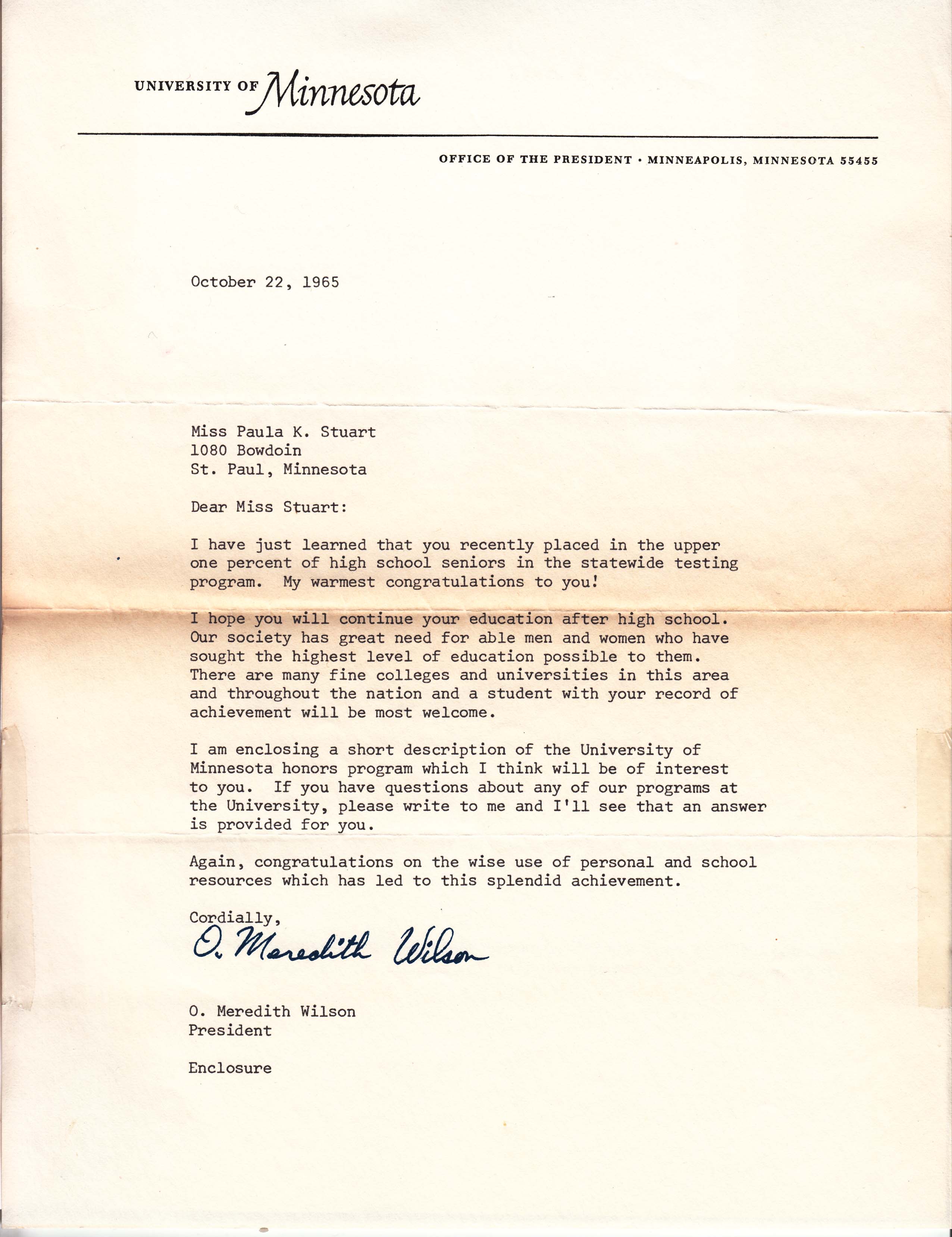
Downsizing is always tough. Getting rid of paper is tough. Scanning is preserving some of it. I am gradually doing this and printed words from the past that I find bring joy, sadness, and laughter. A marriage license, report cards, greeting cards with special messages, poetry someone wrote for me, photos from high school, notes from relatives no longer on this earth, and other items too numerous to list.

I found one page recently that I think I should have copied, framed, and presented to my children. They want me to downsize lots of paper but this one is a keeper! The younger descendants need to see this, too. Ah, but putting it on my blog means that they all get to see it at once and I can save on the framing. In the mode of full disclosure, my high school physics class grades did not put me in the top 1%!U of M 1965 letter


Findmypast Community Edition Now Available to U.S. Libraries

Hot off the Press — a neat press release from Findmypast. Another reason to love our libraries. I share this as an Ambassador for Findmypast.

Findmypast Community Edition Now Available to U.S. Libraries

  • Findmypast, a global leader in family history, announces the availability of a library edition within the United States
  • Provides access for libraries, archives, and other organizations to billions of records from England, Ireland, Wales, Scotland, Australia, New Zealand, Canada and the United States

Free, no obligation, 90-day trial available

Salt Lake City – June 25, 2015

Findmypast, a global leader in family history, announced today the official release of their product for libraries and organizations in the United States. The Findmypast Library Edition gives library access to billions of records from Findmypast’s wide array of collections from the United States, Ireland, England, Wales, Scotland, and other areas of the world. Collection highlights include:

  • Largest online collection of parish records from the United Kingdom
  • Exclusive access to the new PERiodical Source Index (now with images)
  • Most comprehensive Irish family history records in the world

    Amongst the billions of records now available to library patrons is the new PERiodical Source Index (PERSI). PERSI, a popular tool used by genealogists, includes more than 2.5 million indexed entries from thousands of genealogical and local history publications. For the first time, images of articles have been included in the collection – with more being added on a regular basis.

    “We are delighted to bring the best resource for British and Irish family history to America’s library market,” said Annelies van den Belt, CEO of Findmypast.

    The Library Edition provides tools for patrons to work in tandem with a library’s subscription and at home. Individual user accounts allow patrons to build their own family tree, save records from the library’s subscription, and continue working on their family tree.  Library patrons will also have access to Findmypast’s Hints, which aids in the discovery of records from their own family tree.

    Librarians can contact [email protected] for further information, pricing, and to start a free 90-day free trial of the product.

ONE more day till Salt Lake Institute of Genealogy registration opens!

Just one more day until registration opens for the January 2016 Salt Lake Institute of Genealogy aka SLIG. The 21st year of SLIG will take place from January 11-15, 2016 with 13 courses.

Registration online will open on Saturday, June 20, 2016, 9:00 am MDT (8 PDT, 10 CDT, 11, EDT, and corresponding times in other countries. Some courses will fill in minutes!

I coordinate and teach in Course I, Intermediate U.S. Records and Research, Part II. If you attended in January 2015 you took Part I. If not, take part II in 2016 and part I in 2017. The parts do not need to be taken in specific order.

Other instructors in this course are DebbPrintie S. Mieszala, CG, and D. Joshua Taylor, MA, MLS. We are working on some great learning and hands-on class involvement. We update the lectures and syllabus each year. If you took this course many years ago, you might be interested in attending again as much has changed over the years.
This beyond- the-basics two-year course provides in-depth learning on 19th-21st century U.S. resources and the methodology for using them. Probe deeper into the content, origin, location, and interpretation of records. Informative and interactive classroom hours delve into significant records and strategies that take you beyond basic research tools both online and off. On-site Family History Library support and a computer lab from course instructors provide one-on-one assistance and guidance with your own research.

I suggest taking this two part course (the order doesn’t matter) before taking more advanced courses. In this course you will interact with the instructors and other students, learn a lot, advance your own research, and we will also have some laughs and overall just enjoy the week. You will leave the course more confident in your own knowledge, understand where more records are located, and being able to interact with others to advance your own research.

Some suggested prerequisites: Experience researching in a variety of repositories, familiarity with FamilySearch.org and other family history websites, reviewing at least two basic genealogy guidebooks, and previous class room learning related to family history. You don’t need to fill all these prerequisites, but whatever you bring to the week will help with your own education.

For the full lineup of individual sessions in this and other SLIG courses, visit www.infouga.org and be ready to hit those computer keys to sign up online this Saturday morning.

June 15th reminds me of yellow, as in everything in my childhood

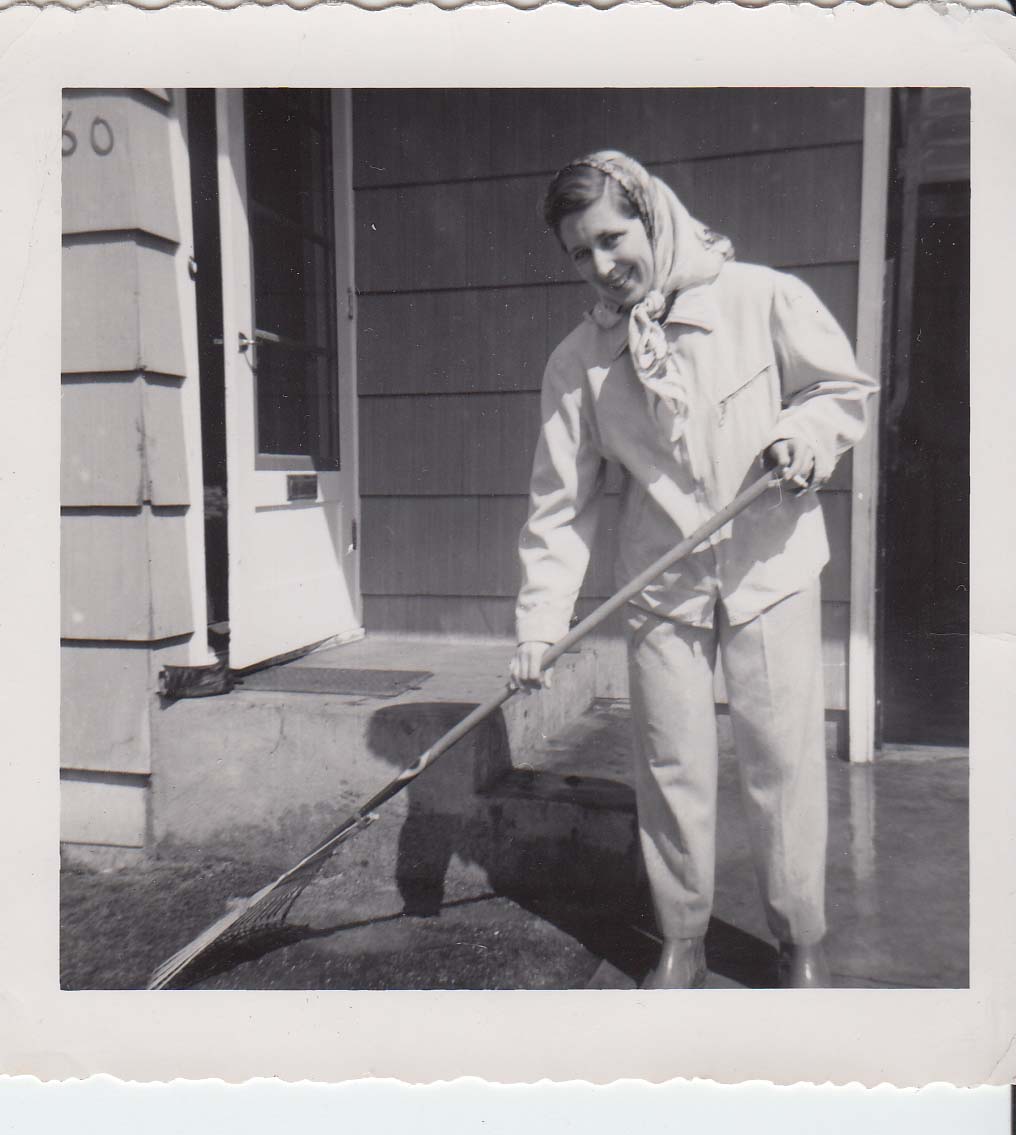
a 1956 Mom rakingYellow. That was my Mom’s favorite color. Today would have been her 89th birthday. I grew up in a yellow house with a yellow fence. I helped repaint that house and fence many times.

When I was a child she even had a yellow convertible.  She had a favorite yellow suit. I remember other yellow things and I think she liked yellow chiffon cake just because it was yellow. I am guessing that her jacket in the picture on the right was yellow.

I hated yellow.

My Mom was a perfectionist. Family history research helped me figure out some reasons for that. That is a story for another time.

So, why did she have a kitchen that was mostly grey and red? I don’t have an answer to that.

I guess I must take after my Mom in some ways. I now like yellow and the accent color in my kitchen is red. I wish you were here to see it, Mom. But only if the Alzheimer’s wasn’t present and that it hadn’t contributed to your death in 2008.

Minnesota websites for genealogical & historical research: Part 4

This is Part 4 of an ongoing series of posts about great online resources from historical societies, archives, libraries, and other places around Minnesota. Don’t forget to check the websites of these organizations for lists, catalogs, and finding aids that tell you about the other extensive research resources that need to be used in person.  You will be astounded at all that is available both online and in these places.

The History Center of Olmsted County
Rochester newspapers index 1859-1912 http://goo.gl/09rGGk  [includes people from outside of Rochester and Olmsted County]
Biographical Index http://goo.gl/BBFUQK


Northeast Minnesota Historical Center Archives and Special Collections, Kathryn A. Martin Library, University of Minnesota , Duluth
Duluth, St. Louis County, Greenwood Cemetery Pauper Burials
http://goo.gl/HvUrRv Compiled by the Twin Ports Genealogical Society

Biographical Files Index Northeast Minnesota http://goo.gl/bqsWmb


University of Minnesota, Wilson Library, John R. Borchert Map library, Minneapolis
Digitized Minnesota atlases and plat maps  https://goo.gl/UcbrDM
Minnesota historical aerial photographs https://goo.gl/9oIyyl

New Germanic genealogy partnership to open many paths

In 1982 or 1983, I joined the German branch of the Minnesota Genealogical Society. It was already a force in the world of Germanic research. It has become a separate entity, the Germanic Genealogy Society, with a worldwide presence. I am proud to be a member of the group of the forefront of this new initiative. It makes so much sense and gives me great hope on my Fischer, Kuschke, and Rohr lines.

I was scheduled to be a part of the initial meetings last month, but alas, a opportunity to visit with some of the grandchildren in Northern Minnesota took precedent.  This press release was written by the new partners:

Announcing the new

German-American Genealogical Partnership

“Bridging the Gap between North America and Europe for Genealogists”

This partnership forms a German-American genealogy structure between countries and organizations for sharing contacts and genealogical research. This partnership is open to all organizations interested in Germanic genealogical research.

Goals of Partnership

Our shared goal is to stimulate interest in Germanic Genealogy and to provide a forum to share research methods and information to further the researching of our ancestors.  The goal of the Partnership is to assist, strengthen and support each society as they continue to grow.

Common Goals include:

  1. Sharing strategies for research
  2. Developing contacts between organization and individuals
  3. Creating a list of most valuable resources
  4. Create lists of references and websites
  5. Sharing contact lists of organizations, speakers, researchers, guides, historians and translators

(more…)

Memorial Day is not a day to say Happy Memorial Day, but what is it?

It’s one of those days when the usual holiday greeting that is preceded by the word “Happy” really doesn’t fit. It’s not really a joyous day. Memorial Day began as Decoration Day which was a day to honor military personnel who died as a result of fighting in wars or later due to war injuries. These brave people fought for the freedom of their fellow U.S. citizens.

Many people today honor Memorial day in two other ways. Some use it to remember anyone who has died and that is seen by the flowers placed at graves all around the country. Some use it to remember and place a flag on any veteran’s grave and to share that person’s story in print and conversation.

Veterans Day is always November 11th and was a day designed to honor all who have served in the U.S. military.

From the website of the U.S. Department of Veterans Affairs:

“Q. What is the difference between Veterans Day and Memorial Day? (more…)